

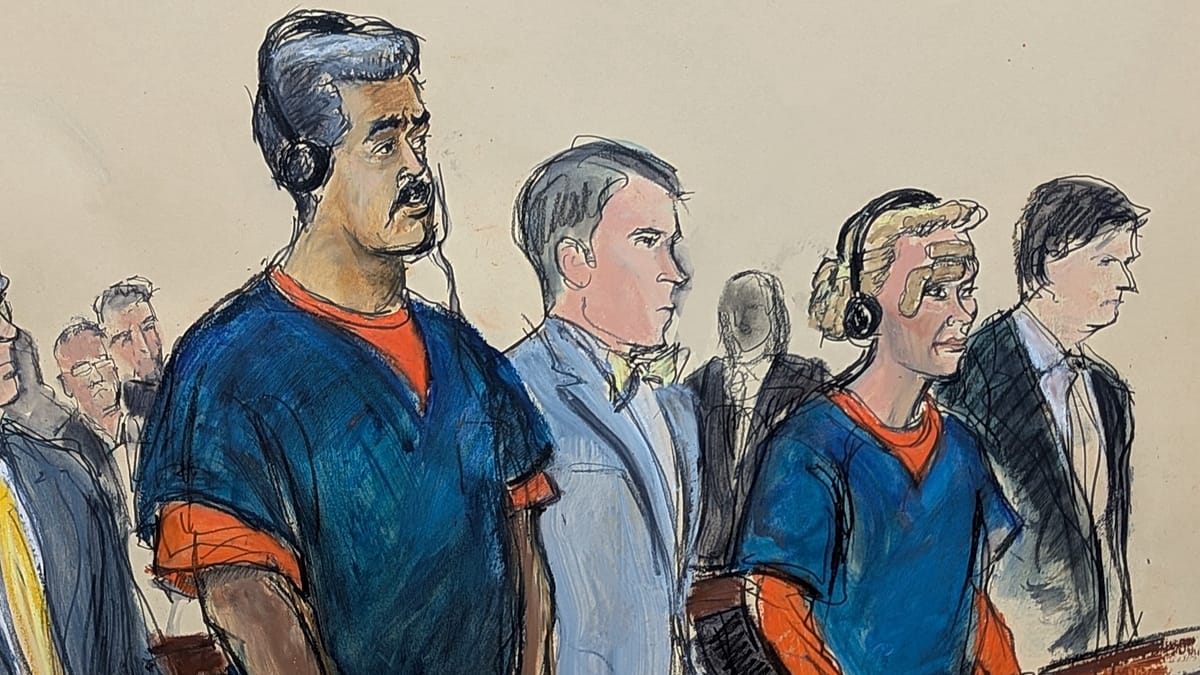
A major Nicolás Maduro lawsuit filed in a US federal court is drawing renewed international attention to alleged human rights abuses in Venezuela. While the case sits far outside the usual worlds of luxury brands, luxury decor, and luxury design, it matters to affluent global audiences because legal stability, governance, and human rights accountability shape investment climates, cultural markets, and the broader ecosystems in which premium industries operate.
The civil case, brought by the families of five young Venezuelan men, accuses former president Nicolás Maduro of responsibility for extrajudicial killings allegedly carried out by the Special Action Forces, or FAES. The lawsuit argues that these deaths were not isolated incidents but part of a broader pattern of state violence during Maduro’s years in power.
Nicolás Maduro Lawsuit: Why This Case Matters Internationally
The Nicolás Maduro lawsuit was filed in federal court in Brooklyn and seeks financial damages under the US Torture Victim Protection Act. According to the complaint, the five victims were killed between 2017 and 2020 in operations that allegedly followed a repeated and deeply troubling formula.
The families claim FAES officers entered neighborhoods in the early morning, dressed in black and covering their faces, then separated the young men from relatives before fatally shooting them. Authorities allegedly later portrayed the deaths as cases of victims having “resisted authority.”
This legal filing is significant for several reasons:
- It attempts to establish direct accountability for alleged state-sponsored killings.
- It places international legal scrutiny on Venezuela’s former leadership.
- It highlights the role of US courts in hearing human rights claims when domestic remedies are seen as ineffective.
- It may influence future civil litigation involving former heads of state accused of abuses.
For global observers, the Nicolás Maduro lawsuit is more than a single court filing. It is part of a wider conversation about whether political leaders can be held personally liable when domestic institutions fail to deliver justice.
The Allegations Against Maduro and FAES
At the center of the complaint is the allegation that Maduro used FAES as a tool of repression and social control. Human rights organizations and international bodies have long raised concerns over FAES, which was eventually dissolved in 2021 after widespread criticism, including from the United Nations.
The lawsuit reportedly describes FAES as an elite security unit that carried out killings in low-income communities, targeting individuals under a narrative of anti-crime enforcement while allegedly suppressing dissent and intimidating neighborhoods.
A Pattern of Extrajudicial Killings
The complaint says the deaths of the five young men fit a broader pattern seen repeatedly during Maduro’s presidency from 2013 to 2026. Families allege these operations were designed not simply to police crime but to instill fear and reinforce state control.
Key elements of the allegations include:
- Pre-dawn raids in residential neighborhoods
- Masked officers dressed in black
- Separation of victims from witnesses and relatives
- Fatal shootings followed by official cover stories
- Limited or nonexistent domestic accountability
These details are central to the Nicolás Maduro lawsuit, which seeks to show that the killings were systematic rather than accidental or isolated.
Why the Venezuelan Judiciary Is a Focus
The families behind the case argue that Venezuela’s judicial system has been too compromised to offer meaningful justice. That claim is crucial because lawsuits under the Torture Victim Protection Act often depend on demonstrating that local remedies are unavailable, ineffective, or unsafe to pursue.
By bringing the case in the United States, the plaintiffs are effectively arguing that accountability can only be pursued abroad. This aspect gives the Nicolás Maduro lawsuit broader relevance in international law and transnational human rights litigation.
Maduro’s Current Legal Situation in the United States
The civil action arrives while Maduro is already being held in New York awaiting trial on separate criminal charges tied to drug trafficking allegations. He has pleaded not guilty to multiple counts, including conspiracy-related charges involving narcotics and weapons.
That unusual legal backdrop adds another layer of complexity to the Nicolás Maduro lawsuit. A defendant already in US custody is now also facing civil claims connected to alleged human rights abuses committed during his presidency.
Could Maduro Claim Immunity?
One of the most closely watched questions is whether Maduro will seek immunity based on his former status as a head of state. Legal experts will likely debate whether such protections apply in this context, especially given his removal from office and the nature of the allegations.
Possible legal issues include:
- Whether former head-of-state immunity can shield him from civil liability
- How US courts assess allegations of torture and extrajudicial execution
- Whether the plaintiffs can connect command responsibility directly to Maduro
- How parallel criminal and civil proceedings may interact
The outcome of these questions could shape the path of the Nicolás Maduro lawsuit and determine whether the case proceeds to evidentiary stages.
Why Global Business and Luxury Audiences Should Pay Attention
At first glance, a human rights lawsuit may seem far removed from luxury-focused sectors. In reality, political risk and institutional credibility are deeply connected to international wealth, cross-border investment, art patronage, property markets, and high-end consumer confidence.
Luxury industries thrive in environments defined by rule of law, transparency, and reputational trust. When a country becomes associated with alleged state violence, corruption, and judicial weakness, the consequences can ripple through:
- Real estate and hospitality investment
- Luxury retail expansion strategies
- Art and collectible markets
- International brand partnerships
- Design, architecture, and cultural development projects
For that reason, the Nicolás Maduro lawsuit is not just a political or legal story. It is also a reminder that governance and accountability are foundational to stable premium markets worldwide.
What Happens Next in the Nicolás Maduro Lawsuit
The case is still in its early stages, and much will depend on procedural rulings, jurisdictional arguments, and any immunity claims Maduro may raise. If the lawsuit moves forward, it could bring fresh documentation, witness accounts, and legal scrutiny to allegations that have circulated for years.
It may also serve as a test of how far US civil law can go in addressing alleged abuses committed abroad by former national leaders. For victims’ families, the goal is compensation and recognition. For the wider international community, the case could become another benchmark in the fight against impunity.
In the end, the Nicolás Maduro lawsuit stands as a stark example of how accountability can follow political power beyond national borders. The clearest takeaway is this: when domestic systems fail, international legal avenues may become the only path left for families seeking justice.