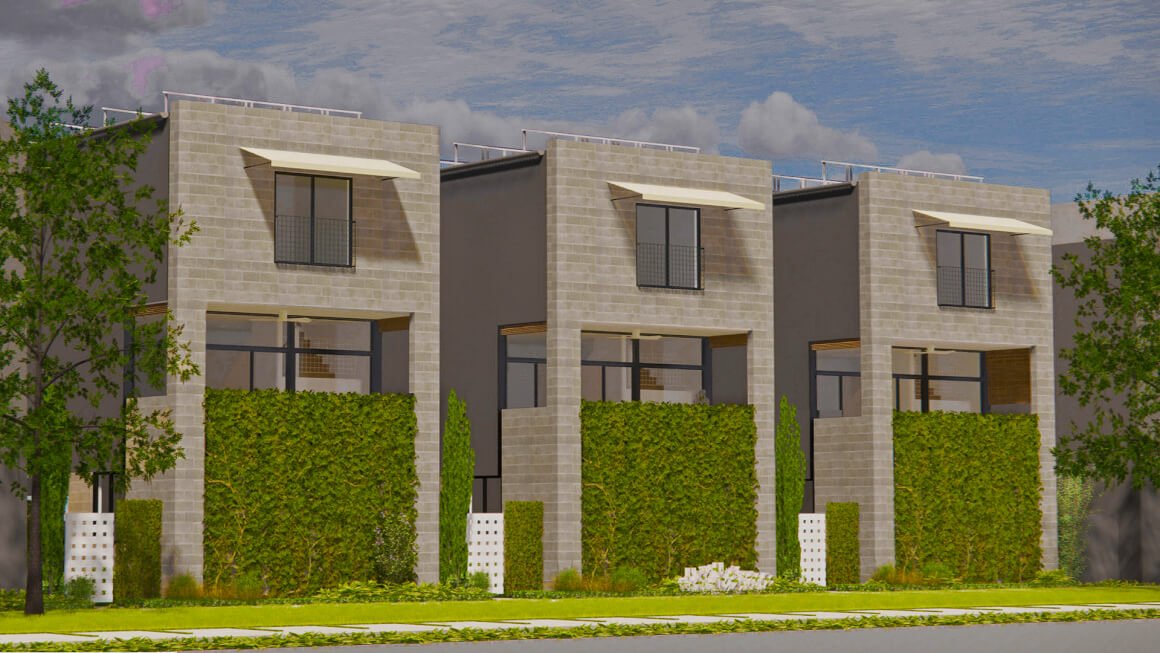
Can affordable housing still feel thoughtful, aspirational, and design-led? The answer is yes—and iconic architecture often begins with exactly this kind of challenge. Three Houses on Bower Lane, designed by Edward M. Baum for Urban Commons, presents a compelling case for how compact family homes can elevate everyday living through proportion, materiality, and smart urban planning.
Set within a tight city context, the project explores how affordability and architectural quality can coexist. Rather than treating budget-conscious housing as purely functional, the design embraces spatial efficiency, street presence, and domestic comfort. For readers interested in Luxury Architecture, Luxury Design, and refined residential thinking, this project shows that design excellence is not limited to grand estates or lavish budgets.
How Three Houses on Bower Lane Reframes Iconic Architecture
At first glance, a trio of affordable family homes may seem modest compared with headline-grabbing towers or coastal villas. Yet this is precisely where iconic architecture becomes most meaningful. It is not only about spectacle; it is also about creating memorable, lasting environments that improve how people live.
The Bower Lane development demonstrates this through a carefully resolved composition of scale, massing, and neighborhood fit. The homes appear contemporary without feeling disconnected from their surroundings. That balance is increasingly important in urban residential architecture, where density, affordability, and livability must work together.
Key architectural strengths include:
- Context-sensitive design: the homes respond to the street rather than dominating it.
- Efficient footprints: compact plans maximize usable family space.
- Strong visual identity: a unified design language gives the homes presence and cohesion.
- Human-centered planning: the project prioritizes comfort, light, and practical daily movement.
In that sense, iconic architecture here is subtle, disciplined, and socially relevant.
Affordable Family Homes With Elevated Design Value
One of the most notable aspects of the project is its refusal to separate affordability from beauty. Too often, affordable residential developments are discussed mainly in terms of cost efficiency. This project suggests a more complete standard: housing should also support dignity, pride, and long-term neighborhood value.
Edward M. Baum’s approach appears rooted in architectural restraint. Instead of relying on excess, the homes use clean geometry and controlled detailing to create a polished result. That design discipline is especially powerful in smaller homes, where every wall, opening, and transition matters.
Why this matters in urban housing
In fast-changing cities, family housing faces several pressures:
- Limited land availability
- Rising construction costs
- Demand for higher density without sacrificing privacy
- Need for flexible spaces that support modern family life
Projects like Three Houses on Bower Lane show how architecture can address these realities without abandoning character. For developers, designers, and homeowners alike, this is a useful model of urban residential design done with care.
Urban Commons and the Power of Community-Focused Design
The collaboration with Urban Commons points to a broader shift in housing conversations. Residential architecture today is increasingly evaluated not just by appearance, but by its contribution to community life. That means considering how homes engage the street, how they support households over time, and how they strengthen a neighborhood’s overall identity.
These goals align naturally with the best principles of iconic architecture. A building becomes memorable when it solves real problems elegantly. On Bower Lane, the design appears to prioritize a shared urban rhythm while still giving each home a sense of individuality.
This community-minded approach can influence:
- Perceived safety and neighborhood cohesion
- Long-term property appeal
- Streetscape quality
- Resident satisfaction and belonging
For readers exploring design-led housing solutions, this project also connects well with topics like sustainable urbanism, contemporary townhouse design, and small-space planning.
Materiality, Form, and the Quiet Luxury of Restraint
In the world of luxury homes, “luxury” is often associated with scale or opulence. But another form of luxury lies in clarity, calm, and thoughtful execution. Three Houses on Bower Lane leans into that quieter interpretation. Its value comes from proportion, order, and the careful shaping of domestic space.
This is where the project resonates with luxury-minded audiences despite its affordable brief. Good architecture does not need extravagance to feel elevated. Instead, the homes appear to embody principles that define lasting residential quality:
- Balanced façades
- Purposeful openings for light and privacy
- Streamlined forms that age well
- Design consistency across multiple units
These elements help explain why iconic architecture can emerge from everyday building types. When architecture is composed with rigor, even a modest row of homes can leave a strong impression.
The growing appeal of design-smart compact living
There is rising interest in homes that do more with less. Buyers and design enthusiasts increasingly appreciate residences that are efficient, flexible, and aesthetically refined. Compact family homes are no longer seen simply as compromises; they are becoming design opportunities.
That shift is especially relevant in luxury design conversations, where sustainability, urban convenience, and smart planning now matter as much as decorative prestige. In this context, Three Houses on Bower Lane stands as a timely example of how iconic architecture can support both aspiration and accessibility.
Lessons for Architects, Developers, and Homeowners
There are several takeaways from this project for anyone following residential design trends:
- Affordability and architectural quality are not opposites.
- Smaller homes benefit most from disciplined planning.
- Street-facing design shapes how communities feel.
- Memorable architecture often comes from clarity, not excess.
For professionals, the project offers a useful benchmark in urban infill housing. For homeowners, it reinforces the idea that livability, elegance, and identity can be achieved in compact footprints. For readers of our Luxury Home coverage, it broadens the definition of what design excellence can look like today.
If you are interested in more residential case studies, explore our coverage of Luxury Home trends and space-conscious interiors in Luxury Decor.
Conclusion: Why Three Houses on Bower Lane Matters
Three Houses on Bower Lane is more than a small residential development—it is a persuasive reminder that iconic architecture can be practical, humane, and attainable. By combining affordability with strong urban design, Edward M. Baum and Urban Commons present a model for family housing that feels relevant to the future of cities.
The clearest takeaway is this: truly iconic architecture is not defined by scale alone, but by how effectively it enriches daily life. In that respect, this project succeeds with quiet confidence—and offers an inspiring blueprint for better urban homes.