In a hyper-connected era, the rarest luxury is no longer a penthouse view or a designer suite—it is disappearance. This travel guide world explores the private escapes wealthy founders, family offices, and global elites choose when they want more than rest: they want total removal from noise, obligation, and visibility.
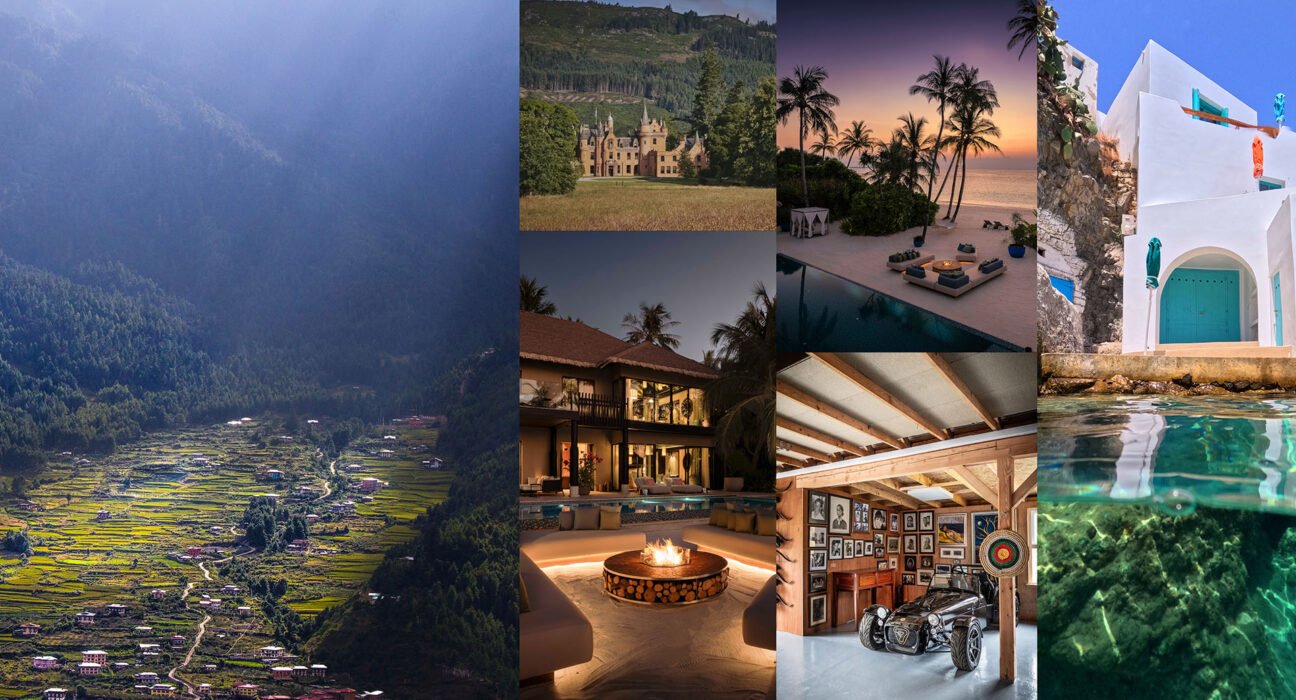
Across Bhutan, the Scottish Highlands, the Maldives, Wyoming, and quiet Greek islands, a new class of luxury travel has emerged. These journeys are not built around spectacle. They are designed around privacy, distance, and the freedom to be unreachable. For travelers inspired by this discreet style of escape, the lesson is clear: true luxury today is about subtraction, not excess.
Travel Guide World: The New Meaning of Luxury Escape
For high-performing travelers, arrival is no longer the thrill. Many have already experienced the world’s most famous resorts, private villas, and branded residences. What they now seek is the opposite of public arrival: a carefully engineered departure.
This shift is changing the definition of premium travel. Instead of focusing on visible status, elite itineraries prioritize:
- Low-profile locations that are difficult to access
- Properties with strict discretion and minimal exposure
- Destinations where geography itself acts as a privacy filter
- Experiences centered on stillness, routine, and anonymity
In this travel guide world, the best destination is not the one everyone is talking about. It is the one no one can easily find.
Why Remote Geography Has Become a Luxury Asset
One of the defining ideas behind modern luxury escape is that geography can do what even the best security cannot: make you uninteresting to reach. Remote valleys, private islands, ranchlands, and hidden estates create natural barriers against interruption.
Bhutan: Silence as a Service
Bhutan remains one of the clearest examples of retreat travel done well. Limited access, protected landscapes, and highly curated hospitality create an environment where guests can disconnect with intention. Properties in the Paro and Punakha regions offer serenity, mountain air, and a deliberate pace that encourages digital withdrawal.
Travelers drawn to wellness, mindfulness, and low-volume luxury often see Bhutan as an ideal stop in a travel guide world itinerary focused on restoration rather than activity.
The Scottish Highlands: Heritage, Space, and Privacy
In the Highlands, isolation comes wrapped in history. Grand sporting estates, restored castles, and countryside lodges offer seclusion without performance. Helicopter transfers, single-track roads, and vast natural surroundings turn simple distance into one of the most effective forms of privacy.
For luxury travelers, these properties deliver:
- Large private grounds
- Minimal neighboring foot traffic
- Traditional hospitality with discreet service
- Opportunities for hiking, fishing, and quiet outdoor living
The Maldives: Whole-Island Exclusivity
At the ultra-luxury end, some travelers are no longer booking a villa—they are taking an entire island. A full-island charter offers complete control over the guest environment, from staff access to family privacy. It is one of the clearest examples of how the luxury market has moved beyond amenities toward controlled absence.
What These Travelers Are Really Buying
Although privacy is the headline, privacy alone does not explain the appeal. What many travelers truly want is permission: permission to stop performing, stop responding, and stop being needed for a little while.
That emotional shift is why many elite getaways look surprisingly simple on the surface. A discreet Greek island house, a ranch in Wyoming, or a hidden coastal estate in Portugal may matter less for extravagance than for what they allow guests to do:
- Wake up without checking a phone
- Swim, hike, or ride without an audience
- Cook badly, read slowly, and waste time freely
- Exist outside business metrics and social expectations
Seen through the lens of travel guide world trends, this is a profound change. Luxury is becoming less about being impressed and more about being left alone.
How Discreet Luxury Travel Is Planned
The most private trips are rarely discovered through ordinary booking channels. They depend on trusted advisors, long-standing relationships, and properties that do not advertise heavily. In many cases, discretion is part of the product itself.
Common Features of Ultra-Private Travel Planning
- Reservations made through holding companies or private offices
- Minimal digital footprint before and during the stay
- Permanent staff trained in confidentiality
- Properties with no public listing or limited photography
- Remote transfer logistics that reduce visibility
Even travelers outside the billionaire bracket can learn from this model. Choosing smaller properties, shoulder-season dates, slower destinations, and less-publicized regions can create a quieter, more exclusive feeling without requiring extreme budgets.
Lessons for Travelers Planning Their Own Escape
You do not need a private island to borrow the philosophy behind this travel guide world approach. The core principles can shape any luxury trip:
- Choose friction wisely: Harder-to-reach places often reward you with peace.
- Prioritize discretion over trendiness: The most talked-about destinations are rarely the most restful.
- Build in digital boundaries: A meaningful escape needs limits on access and alerts.
- Look for place, not performance: Character, landscape, and privacy outlast social-media appeal.
This is especially relevant for readers researching high-end escapes through a travel guide ireland lens as well. Ireland offers its own quiet luxury through private manor stays, coastal estates, remote islands, and countryside retreats that deliver intimacy, scenery, and heritage without unnecessary spectacle.
From Ireland to the World: The Future of Quiet Luxury
The wider luxury market is clearly moving toward hidden value. Whether in Ireland, the Aegean, the Alps, or Asia, travelers are increasingly searching for experiences that feel protected, personal, and psychologically spacious. This is where travel guide ireland inspiration meets global luxury trends: intimate estates, slow landscapes, tailored service, and a deep sense of place.
The best escapes are no longer defined by how loudly they announce themselves. They are defined by how completely they let you disappear.
Ultimately, this travel guide world perspective reveals the real evolution of luxury travel. The greatest indulgence is not more access, more attention, or more display. It is the rare chance to step away from all of it—and return renewed because, for a little while, no one could reach you.