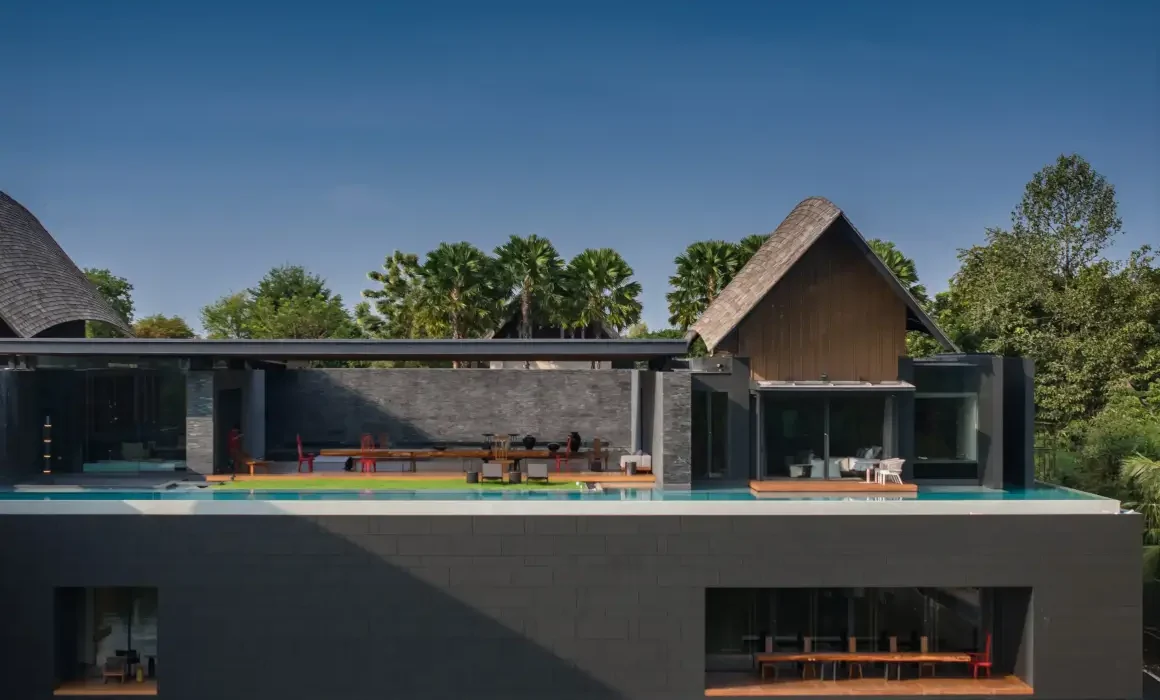
What makes a home feel timeless rather than trendy? In the case of Water House, the answer lies in iconic architecture that honors climate, culture, and the rituals of everyday life. This striking residence reimagines traditional Thai living by organizing domestic spaces around a serene central pond, creating a luxury home that feels both deeply local and unmistakably contemporary.
Set within the growing conversation around tropical design and place-sensitive homes, Water House stands out for its ability to transform a familiar vernacular idea into a refined architectural statement. Rather than relying on spectacle alone, the project demonstrates how luxury architecture can emerge from environmental intelligence, material warmth, and a strong connection between indoors and outdoors.
How Water House Redefines Iconic Architecture
At its core, Water House is an example of iconic architecture that does not chase excess. Instead, it builds its identity through spatial clarity and cultural resonance. The central pond is not simply a decorative feature; it is the compositional heart of the home, shaping circulation, framing views, and reinforcing the relationship between water, cooling, and calm.
This approach draws from traditional Thai domestic patterns, where open courtyards, shaded transitional areas, and water elements often mediate heat and encourage communal living. By reinterpreting those principles through a modern lens, the residence achieves a balance that many luxury homes seek but few fully realize: privacy without isolation, openness without exposure, and elegance without detachment from place.
For readers exploring more luxury architecture inspiration, Water House offers a compelling reminder that the most memorable homes often begin with regional wisdom rather than imported formulas.
The Central Pond as a Living Design Element
A spatial anchor
The central pond gives the house an organizing logic that feels intuitive and ceremonial at once. Rooms appear to unfold around it, allowing the water to become a constant visual presence. This creates a sense of continuity throughout the home while softening the boundaries between public and private zones.
In many high-end residences, focal features are added after the architecture is resolved. Here, the water element appears foundational. That distinction matters because it elevates the design from decorative luxury to integrated, iconic architecture.
A climate-responsive strategy
In tropical environments, water can contribute more than beauty. Paired with shade, cross ventilation, and careful orientation, it can support a cooler microclimate and a more comfortable living experience. Water House reflects this thinking through a layout that appears tuned to airflow and environmental moderation.
That makes the home relevant not only in aesthetic terms but also in the broader movement toward sustainable luxury design. It suggests that passive design principles and premium living are not opposing ideals but natural partners.
Why Traditional Thai Living Still Inspires Modern Luxury Homes
One of the most compelling aspects of Water House is the way it revisits traditional Thai living patterns without turning them into nostalgia. This is where iconic architecture becomes culturally meaningful. The home borrows the essence of vernacular design—water, openness, layered thresholds, and a close relationship to nature—while translating those ideas into a polished contemporary residence.
Key characteristics of this approach include:
- Centralized communal space that encourages gathering
- Shaded circulation zones that reduce heat gain
- Fluid indoor-outdoor connections
- Natural materials and textures that create warmth
- A stronger dialogue between architecture and landscape
In the luxury home sector, these qualities are increasingly prized because they support wellness, flexibility, and sensory richness. Homeowners are looking beyond square footage toward spaces that feel restorative and rooted.
If you enjoy residences shaped by atmosphere and craftsmanship, you may also want to explore related ideas in luxury home design and luxury decor trends.
Materiality, Light, and the Luxury of Restraint
Although the concept of Water House is powerful, its success likely depends just as much on restraint. Truly iconic architecture often relies on disciplined material palettes, carefully framed natural light, and details that reward slow observation. In homes inspired by tropical modernism, surfaces, shadows, reflections, and breezeways become part of the visual language.
That sense of restraint aligns perfectly with current directions in luxury design, where understated sophistication is often more desirable than overt ornament. Rather than overwhelming the eye, Water House appears to cultivate mood through proportion, rhythm, and the quiet drama of water and light.
This is particularly important in premium residential design because true luxury today is increasingly defined by experience:
- How a home cools naturally during the day
- How views unfold as you move through it
- How private areas remain calm and sheltered
- How landscape and architecture feel inseparable
- How daily rituals are elevated through design
What Designers and Homeowners Can Learn from Water House
Water House offers lessons that reach far beyond a single residence. Its significance lies in showing that iconic architecture can emerge from context-driven thinking rather than formal novelty alone. For architects, developers, and design-conscious homeowners, the project points to a more grounded future for luxury architecture.
Some of the strongest takeaways include:
- Design around climate: Passive cooling and spatial ventilation should shape the concept early.
- Use water purposefully: Reflecting pools and ponds can organize space, improve ambiance, and support environmental comfort.
- Honor vernacular intelligence: Regional building traditions remain relevant when thoughtfully updated.
- Prioritize transition spaces: Courtyards, terraces, and shaded walkways enrich the experience of home.
- Let luxury feel natural: Material authenticity and spatial calm often create a stronger impression than excess.
In a global market full of interchangeable high-end properties, homes like this feel distinct because they belong to their place. That is a defining trait of enduring, iconic architecture.
The Future of Iconic Architecture in Tropical Residential Design
As the design world continues to prioritize sustainability, wellness, and local identity, projects like Water House are likely to become even more influential. They show how tropical residential design can be luxurious without being wasteful, contemporary without losing heritage, and visually compelling without abandoning comfort.
For the luxury architecture audience, that is an important shift. The next generation of landmark homes may not be the loudest or most extravagant. They may be the ones that respond most intelligently to culture, climate, and everyday life.
Water House ultimately proves that iconic architecture is not just about a dramatic silhouette. It is about creating spaces that people feel, remember, and want to inhabit. By centering the home around water and reviving the spatial wisdom of Thai tradition, this residence offers a model for more thoughtful luxury living—and a powerful vision of where iconic architecture is headed next.