A new Vatican schism story is unfolding in Europe, and while it begins inside the Catholic Church, its implications reach far beyond theology. For readers interested in luxury brands, luxury decor and luxury design, this moment offers a striking case study in how institutions use ritual, symbolism, heritage and visual language to defend identity in times of change.
The latest rupture centers on the Society of Saint Pius X, often called the Lefebvrists, who rejected excommunication after consecrating bishops without papal approval. At the same time, the Transalpine Redemptorists in Scotland have announced another episcopal consecration without a papal mandate, raising the possibility of a fresh break with Rome. On the surface, this is a religious governance dispute. At a deeper level, it is also a conflict about who controls tradition, how authority is displayed and what happens when legacy systems resist modernization.
Vatican schism and the fight over heritage
The current Vatican schism debate revolves around unauthorized bishop consecrations, an act the Holy See treats as a grave breach of church order. Father Davide Pagliarani, superior general of the Society of Saint Pius X, argued that the excommunication was unjust and invalid, while also expressing sorrow and leaving the door open to dialogue with Pope Leo XIV.
The group’s position reflects a familiar tension seen in many heritage-driven sectors: preservation versus adaptation. The Lefebvrists reject key reforms associated with the Second Vatican Council and maintain older liturgical forms, including the Latin Mass. Their argument is not simply procedural. It is rooted in a belief that continuity, sacred tradition and inherited form carry intrinsic value that modern institutions have weakened.
That framing may sound distant from the world of interiors or fashion, yet the same logic often appears in luxury markets:
- Historic maisons defending artisanal methods against mass-market trends
- Collectors favoring original craftsmanship over contemporary reinterpretation
- Design purists resisting minimalist standardization in favor of ornament and ritual
- Legacy brands leveraging heritage as a source of legitimacy
In each case, tradition becomes more than style. It becomes authority.
The visual power of ritual, space and luxury design
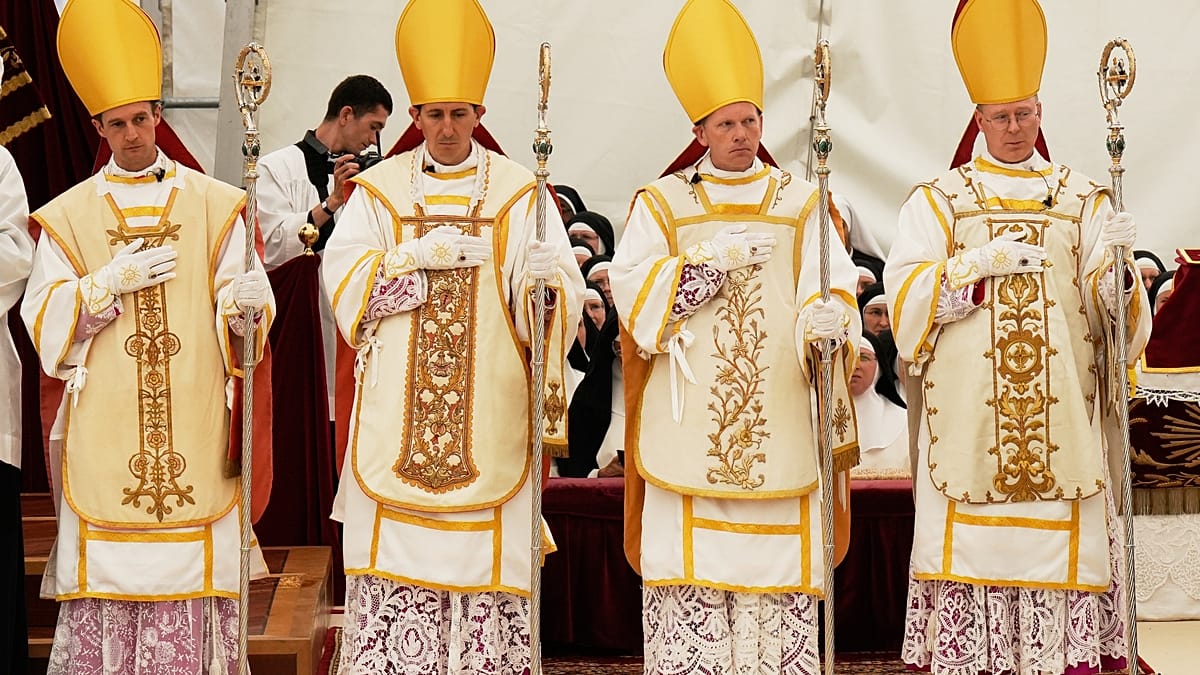
One reason the Vatican schism story resonates culturally is that Catholic traditionalism is deeply visual. Ritual garments, sacred vessels, incense, processions, architecture and ceremonial choreography all create an immersive aesthetic experience. This is not luxury in a commercial sense, but it does draw on many of the same emotional triggers that shape luxury design: rarity, craft, atmosphere, continuity and reverence for detail.
Why aesthetics matter in institutional power
Traditionalist movements often understand that beauty can function as persuasion. A richly ordered environment signals permanence. Repeated gestures suggest discipline. Historic materials evoke legitimacy. In design terms, this is a masterclass in brand world-building.
Luxury houses have long used similar tools to communicate status and trust:
- Material excellence: stone, gold, silk, wood and metal imply durability and value
- Controlled symbolism: every color, motif and form reinforces identity
- Ritualized experience: ceremonies and protocols create emotional attachment
- Architectural consistency: spaces express the institution’s worldview
Seen this way, the Vatican schism is also a dispute over the stewardship of an extraordinarily powerful design language.
Scotland’s Redemptorists and the new fracture line
The Vatican schism narrative expanded when the Sons of the Most Holy Redeemer, known as the Transalpine Redemptorists, announced that an episcopal consecration would take place on 25 July on Papa Stronsay in Scotland’s Orkney Islands without approval from Rome. Their superior, Monsignor Pierre Roy, reportedly confirmed the plan and used stark language about the See of Rome.
The local Church reacted swiftly, with the Bishop of Aberdeen warning the faithful that the move constitutes a serious act of disobedience. This matters because it suggests the current crisis is not isolated. It may indicate a broader traditionalist hardening, in which smaller communities increasingly define authenticity through separation rather than reconciliation.
For observers of luxury and design culture, this is a reminder that niche communities can exert outsized influence when they build a strong, coherent identity. Small groups with intense loyalty often shape broader conversations about taste, authenticity and exclusivity.
What luxury brands can learn from the Vatican schism
There are clear lessons here for luxury brands navigating heritage, reinvention and customer trust. The Vatican schism reveals how quickly legacy can become contested when stakeholders believe core values are being diluted.
Key strategic takeaways
- Heritage needs interpretation, not fossilization: tradition can inspire renewal, but rigid nostalgia can produce fracture.
- Authority must be legible: institutions need clear governance if they want symbolic systems to hold.
- Aesthetics are never neutral: visual language communicates ideology as much as beauty.
- Dialogue matters: even deeply divided communities often leave room for reconciliation when identity is respected.
Brands in luxury decor and luxury design face similar pressures. Consumers want authenticity, but they also expect relevance. The most resilient names are those that preserve craftsmanship and codes while updating the experience for a changing world.
Tradition, modernity and the future of symbolic institutions
Cardinal Baldassare Reina responded to the dispute by noting that the Church has survived far greater crises across two millennia. That historical perspective is important. Institutions built on long memory rarely rise or fall on a single rupture. Instead, they evolve through repeated cycles of challenge, resistance and recalibration.
The same is true in luxury. Whether in couture, hospitality, interiors or collectible design, the enduring question is always the same: how do you modernize without losing the aura that made you distinctive in the first place?
The current Vatican schism should therefore be read not only as a religious controversy, but as a broader cultural drama about legacy. It shows how ritual, space, craftsmanship and symbolic authority remain potent forces in public life. For anyone working in luxury brands, luxury decor or luxury design, that is the real insight: heritage is powerful, but only when institutions can persuade people that they are its rightful guardians.
As this Vatican schism develops, the clearest takeaway is simple: tradition may be timeless, but control over its meaning is never guaranteed.