Uzbekistan is no longer content with being a quick stop on a Silk Road checklist. The country is now reshaping Uzbekistan luxury travel around longer itineraries, better air access and richer cultural experiences designed to appeal to high-value visitors with an eye for heritage, design and refined hospitality.
That shift matters well beyond mainstream tourism. For travelers interested in luxury brands, luxury decor and luxury design, Uzbekistan offers an increasingly compelling mix of grand architecture, artisanal craftsmanship, boutique stays and immersive regional journeys. With foreign tourist trips rising sharply and tourism revenues climbing alongside them, the country is making a clear bet: fewer rushed visits, more meaningful stays.
Uzbekistan luxury travel is moving beyond arrival numbers
Official data shows just how quickly the market is expanding. Inbound foreign tourist trips climbed from 6.63 million in 2023 to 7.96 million in 2024, before reaching a preliminary 11.68 million in 2025. Tourism service exports followed the same upward path, growing from $2.14 billion in 2023 to $3.52 billion in 2024 and then to $4.8 billion in 2025.
But the government’s current strategy is not simply about boosting footfall. Tourism officials have made it clear that the next phase of growth depends on attracting travelers who stay longer, spend more and explore more of the country than the classic Samarkand-Bukhara-Khiva route.
That approach naturally supports Uzbekistan luxury travel, where value comes from curated experiences rather than volume alone. Instead of chasing one-night stops, the country is investing in a model built around:
- Long-haul travelers from Europe, Asia and the Americas
- Multi-region itineraries inside Uzbekistan
- Higher-end hotels and hospitality services
- Cultural spending on crafts, gastronomy and design-led experiences
- Regional travel packages across Central Asia
A Silk Road setting with growing luxury design appeal
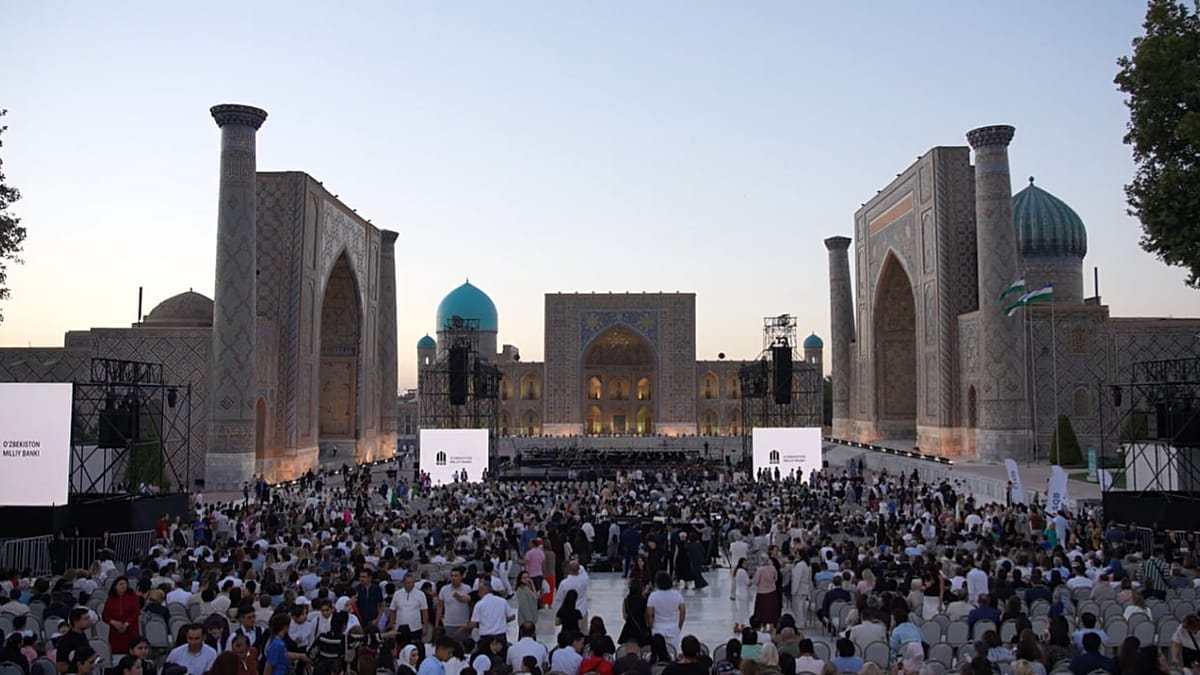
What makes Uzbekistan especially relevant to luxury-focused audiences is its visual identity. This is a destination where architecture, ornament and craft are not side attractions; they are the experience. Blue-tiled madrassas, carved wooden columns, handwoven textiles, suzani embroidery and intricately patterned ceramics all contribute to a strong sense of place.
For travelers drawn to interiors and craftsmanship, Uzbekistan luxury travel has growing appeal because it connects hospitality with design heritage. Boutique properties and restored guesthouses increasingly frame local materials and decorative arts as part of the guest experience. In practical terms, that means travelers can move from monumental Islamic architecture to artisan workshops and then to design-conscious accommodations that reflect regional aesthetics.
Why design-minded travelers are paying attention
Uzbekistan sits at an interesting crossroads between cultural tourism and luxury immersion. It offers:
- Architectural grandeur in cities like Samarkand, Bukhara and Khiva
- Decor inspiration rooted in tilework, textiles and handcraft traditions
- Authentic provenance for artisanal purchases and bespoke souvenirs
- A slower travel rhythm that rewards extended stays
That combination is increasingly rare in global tourism, where many destinations struggle to preserve local character under the pressure of rapid growth.
Air connectivity is becoming the backbone of Uzbekistan luxury travel
One reason Uzbekistan believes it can lengthen stays is improved accessibility. Tourism growth depends heavily on international air links, and the national carrier is expanding both fleet and reach. Uzbekistan Airways has grown from 26 aircraft five years ago to 45 today, while also planning a long-term wide-body expansion through a firm order for Boeing 787-9 Dreamliners.
For luxury travelers, better connectivity changes the decision-making process. Direct or smoother connections make once-distant cultural destinations easier to fit into premium itineraries, whether as a standalone trip or part of a broader Central Asia journey.
Officials are also promoting Tashkent as a strategic transit hub between Europe and Asia, and between North America and Asia. If that ambition succeeds, Uzbekistan luxury travel could benefit from a rise in stopovers that turn into multi-day stays, especially among affluent travelers seeking less obvious destinations.
Why easier access matters for premium tourism
High-value tourism is often driven by convenience as much as aspiration. Expanded air links can help deliver:
- Shorter overall travel times
- More seamless premium itineraries
- Greater appeal for long-haul markets
- Stronger business and bleisure travel potential
- Higher confidence among first-time visitors
Regional packages could redefine the Central Asia luxury circuit
Another pillar of the strategy is joint regional tourism. Uzbekistan wants long-haul travelers to view the country as part of a broader Central Asian experience rather than an isolated stop. That opens the door to more sophisticated itineraries linking cultural capitals, mountain escapes, desert landscapes and Silk Road heritage across neighboring countries.
For the luxury segment, this is particularly promising. Multi-country journeys often appeal to travelers who prioritize exclusivity, private planning and depth over speed. In that sense, Uzbekistan luxury travel can evolve into the anchor for a wider regional circuit that blends history, hospitality and bespoke discovery.
Done well, these packages could attract travelers who want:
- Private heritage-led journeys
- Curated craft and design tours
- High-end rail and air connections
- Longer stays across multiple cities and countries
- A more original alternative to saturated luxury destinations
Domestic transport will determine whether visitors stay longer
Attracting visitors is only half the challenge. Keeping them longer depends on how easily they can move around once they arrive. Uzbekistan’s distances can be substantial, especially for travelers hoping to go beyond the best-known urban centers.
Authorities are responding with plans for new high-speed transport corridors, more high-speed trains and additional airport development. These upgrades are essential for spreading tourism beyond headline destinations and helping travelers discover regions that could support wellness retreats, remote design escapes and culturally rich slow travel.
In other words, the future of Uzbekistan luxury travel may depend not just on glamour but on logistics. A destination becomes truly premium when it offers both beauty and ease.
What this means for luxury travelers now
Uzbekistan’s tourism strategy points to a clear transformation: from a heritage destination known for iconic Silk Road cities to a more complete luxury proposition built on culture, access and extended exploration. That makes now an intriguing moment to visit, before the market becomes fully mainstream.
For travelers interested in luxury decor, luxury design and authentic cultural refinement, the country offers a distinctive proposition:
- Historic settings with strong visual identity
- Craft traditions that feel relevant to contemporary luxury
- Improving flight connectivity
- A government-backed push for higher-value tourism
- The possibility of deeper, slower and more design-rich itineraries
As infrastructure improves and regional packages mature, Uzbekistan luxury travel could become one of the most compelling under-the-radar experiences in Eurasia. The real opportunity is not to rush through it, but to stay long enough to understand how heritage, craftsmanship and modern hospitality meet along the Silk Road.