Spain’s migrant regularisation scheme is making headlines for more than its scale. With nearly 1.2 million applications filed in just over two months, the policy could reshape the country’s labor market in ways that matter far beyond politics, including for luxury brands, luxury decor, and luxury design.
While the story sits firmly within migration and employment policy, its economic aftershocks are highly relevant to premium sectors that depend on skilled labor, construction capacity, hospitality growth, and high-end real estate development. For businesses watching Spain’s evolving market, this is a moment worth understanding closely.
Why Spain’s migrant regularisation scheme matters now
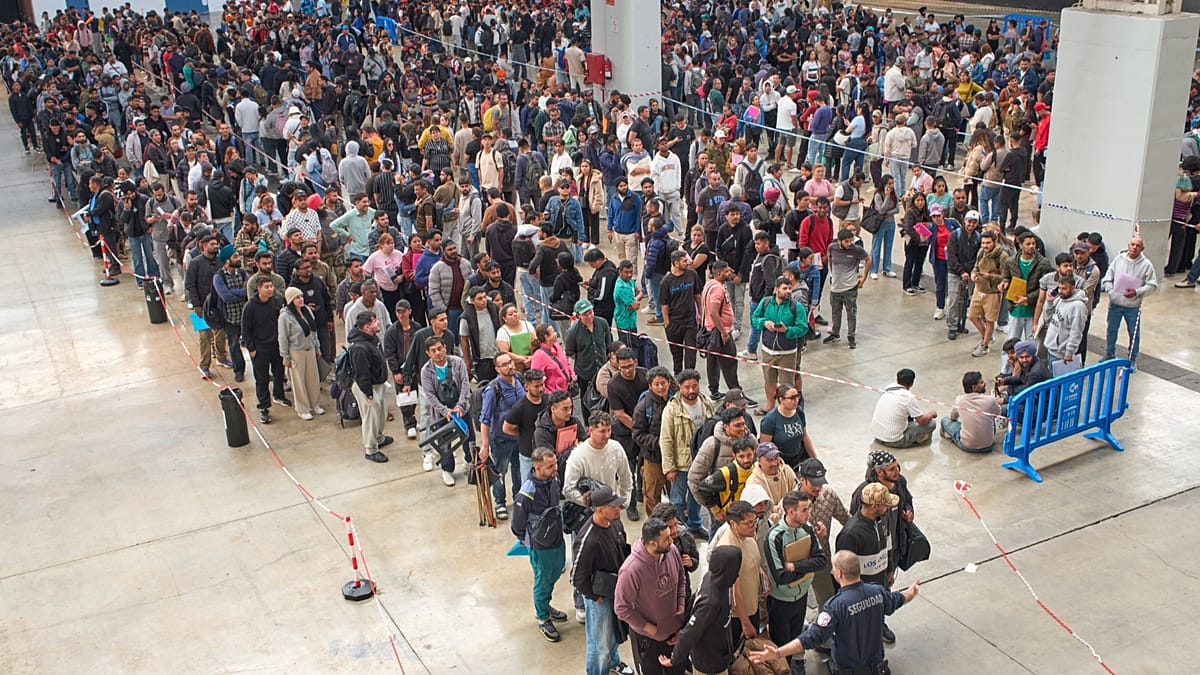
According to official figures, 1,174,978 undocumented migrants applied for legal status under Spain’s migrant regularisation scheme between mid-April and 30 June 2026. The initiative, launched by the government of Prime Minister Pedro Sánchez, stands out in a European climate where many countries are tightening rules on irregular immigration.
The scale alone is striking. More than 600,000 applications are already under review, and the government has said authorities will assess whether applicants meet the conditions for work and residence permits valid in Spain. Early projections suggested around 500,000 people could ultimately regularise their status, though final approvals will depend on each case.
Applicants must demonstrate:
- A clean criminal record
- At least five consecutive months in Spain before 1 January
- Compliance with the documentation and review process
The demographic profile is also notable. Most applicants are under 45, and men account for 57% of submissions. Latin Americans represent the largest share, led by Colombia, while Morocco, Venezuela, and Peru are also among the most represented nationalities.
Labor shortages and the luxury economy
The direct argument in favor of Spain’s migrant regularisation scheme is economic. Sánchez has emphasized that sectors such as construction need more workers, and Spanish business leaders have broadly welcomed the move. That matters for luxury industries because construction, fit-out, hospitality, and property development all feed into premium consumer experiences.
Luxury design does not operate in a vacuum. Behind every high-end villa renovation, boutique hotel launch, flagship retail concept, or bespoke interior project is a network of workers handling building, finishing, logistics, installation, and maintenance. When labor shortages intensify, costs rise, timelines stretch, and ambitious projects stall.
For luxury-facing sectors in Spain, a larger legal workforce could support:
- Faster delivery of upscale residential and hospitality projects
- Improved staffing for premium construction and renovation work
- Greater flexibility for suppliers serving luxury decor and interiors
- More predictable labor pipelines in tourism-linked regions
In a market where craftsmanship and timing are critical, even indirect labor market improvements can influence profitability and brand positioning.
Luxury design and high-end real estate could benefit
Spain has long been a magnet for affluent international buyers, second-home investors, and luxury hospitality groups. From Madrid and Barcelona to Marbella, Ibiza, and Mallorca, demand for refined interiors and architect-led spaces remains strong. Spain’s migrant regularisation scheme could help ease some of the bottlenecks that affect these high-value projects.
Construction capacity and project execution
Luxury design projects often involve complex schedules, specialist trades, and premium materials. If legal work authorization expands the available labor pool, developers and design studios may find it easier to complete projects on time. That is particularly important in resort destinations and urban luxury districts where delays can disrupt sales cycles and seasonal openings.
Hospitality expansion
Spain’s luxury hotel and branded residence markets rely on both front-of-house excellence and back-end operational readiness. A broader legal workforce can support hotel openings, refurbishments, and guest-service infrastructure. In turn, this can create more demand for luxury decor, custom furnishings, and experiential design concepts.
Premium residential demand
Although Spain’s migrant regularisation scheme is not a housing policy, labor availability shapes the housing pipeline. High-end residential projects need builders, installers, and support teams to move from concept to completion. A less constrained labor market may strengthen confidence among luxury developers planning new launches.
The political tension behind Spain’s migrant regularisation scheme
The policy is not without controversy. Conservative and far-right opponents argue that Spain’s migrant regularisation scheme could encourage more irregular immigration. Supporters, by contrast, say it is a pragmatic response to labor needs and existing realities on the ground.
This tension matters for investors and brands because political uncertainty can affect business sentiment. Even if the labor market benefits are real, future debate over immigration policy may influence regulation, public discourse, and market confidence. Luxury brands entering or expanding in Spain should pay attention not only to workforce trends but also to the broader policy climate.
What brands and designers should watch next
The most important question is not the number of applications alone, but how many approvals follow. Spain’s migrant regularisation scheme will only have a lasting economic effect if applications translate into legal work participation at scale.
Key signals to monitor include:
- Approval rates: Final numbers will determine the true labor impact.
- Processing speed: Delays could postpone benefits for construction and related sectors.
- Regional distribution: Where approved workers settle will shape local project capacity.
- Sector absorption: Construction, hospitality, and services may benefit at different speeds.
- Political response: Future policy shifts could alter business expectations.
For luxury brands and designers, these indicators can help assess whether Spain is becoming a more operationally attractive environment for expansion, development, and long-term investment.
Conclusion: a migration policy with implications for luxury design
Spain’s migrant regularisation scheme is first and foremost a major immigration and labor story. But it also carries meaningful implications for industries that depend on workforce stability, especially luxury design, luxury decor, and the broader premium property ecosystem.
If the policy succeeds in bringing more workers into the formal economy, Spain could strengthen the foundation beneath its high-end construction, hospitality, and design sectors. For luxury businesses, the takeaway is clear: Spain’s migrant regularisation scheme may prove to be not just a social policy milestone, but a practical market signal for the future of premium development.