

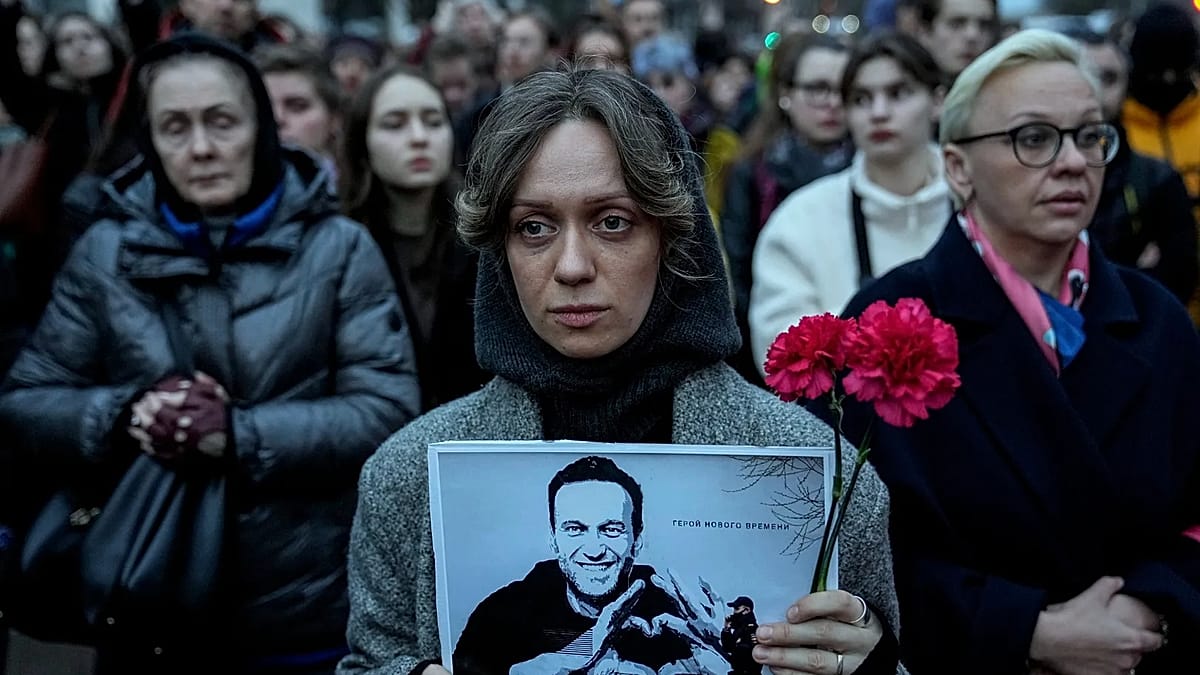
The European Union has moved to tighten pressure on individuals tied to the death of Alexei Navalny, adding six Russian nationals to its sanctions list. While this geopolitical development may seem far from the worlds of luxury brands, luxury decor, and luxury design, the expansion of EU sanctions has wider implications for wealth management, cross-border assets, and the movement of high-value property across Europe.
The latest measure targets scientists and researchers allegedly connected to a chemical weapons programme linked to the substance believed to have killed Navalny. For affluent investors, collectors, and luxury market observers, this is another sign that political risk and asset scrutiny are becoming central to how wealth is stored, transferred, and protected.
EU sanctions six Russians over Navalny poisoning
EU member states agreed to blacklist six Russian nationals said to be involved in the development of epibatidine, a toxic substance reportedly found on Navalny’s body after his death in February 2024. The sanctions package includes asset freezes across the European Union and travel bans that apply throughout the bloc.
According to reporting on the measure, those sanctioned are linked to Russia’s military chemical weapons infrastructure. Among the most prominent names is Igor Babkin, identified as head of the Signal Scientific Centre, a laboratory considered responsible for synthesising epibatidine.
Also included is Irina Derevyagina, a chemical research analyst at Russia’s State Research Institute of Organic Chemistry and Technology, described as a key figure in the country’s chemical weapons programme. Another listed individual is Mikhail Gutsalyuk, who heads the scientific department at the Military Academy of Radiological, Chemical and Biological Defence.
The decision underscores the EU’s effort to hold individuals accountable through targeted sanctions rather than broad, symbolic statements alone.
Why the Navalny sanctions matter beyond politics
At first glance, the Navalny case belongs squarely to foreign policy and human rights. But sanctions have a way of rippling into sectors far beyond diplomacy, especially in markets built around prestige assets, international mobility, and discreet ownership structures.
For luxury-facing industries, the real significance lies in enforcement. Asset freezes do not stop at cash holdings. They can affect:
- Bank accounts and investment vehicles held within the EU
- Real estate connected to sanctioned individuals
- High-value movable assets such as art, jewelry, watches, yachts, and designer furnishings
- Business relationships with galleries, dealers, auction houses, and private intermediaries
That makes the blacklist relevant not only to policymakers, but also to compliance teams, private wealth advisers, and luxury businesses serving international clients.
How sanctions affect luxury brands and design markets
The overlap between sanctions policy and luxury commerce has become increasingly visible in recent years. High-end sectors often handle portable stores of value, making them especially sensitive to restrictions on ownership, payments, and movement across borders.
Luxury brands face stricter compliance expectations
Luxury brands operating in Europe must pay close attention to sanctions screening, beneficial ownership checks, and customer due diligence. Even when a sanctioned person is not the named buyer, an indirect connection through trusts, shell companies, or family offices can trigger serious legal and reputational consequences.
For premium fashion houses, watchmakers, jewelers, and bespoke ateliers, the compliance burden is no longer confined to banks. It is increasingly part of doing business at the top end of the market.
Luxury decor can become an asset class under scrutiny
Luxury decor is often associated with taste and lifestyle, but it can also function as a wealth preservation tool. Rare furniture, collectible lighting, museum-grade objects, and custom interior commissions may attract attention when authorities examine whether sanctioned individuals hold value through tangible goods.
As a result, dealers and design galleries may need more robust provenance checks, payment verification, and client vetting procedures.
Luxury design is not immune to geopolitical risk
Luxury design thrives on international clientele, global fairs, and cross-border commissioning. But when sanctions lists expand, design studios, developers, and private concierges can face sudden complications involving contract execution, shipment, insurance, and final delivery.
This is especially true for projects involving:
- Ultra-prime European real estate
- Custom interiors for internationally mobile owners
- Collectible design pieces stored in freeports or private warehouses
- Transactions routed through complex offshore structures
The broader context of the Navalny case
Alexei Navalny was Russia’s most prominent opposition figure and a leading anti-corruption activist. After surviving a poisoning attempt in 2020, he returned to Russia in 2021 and was arrested. He later faced additional charges and was sentenced to 19 years in prison.
Navalny died on 16 February 2024 in an Arctic penal colony. European investigations subsequently concluded that his death resulted from chemical poisoning. The new sanctions reflect that finding and focus on people allegedly involved in the scientific and technical chain behind the substance in question.
In practical terms, the sanctions signal that the EU intends to keep using targeted legal and financial tools in response to politically significant deaths and human rights abuses.
What wealthy individuals and luxury businesses should watch next
As the EU expands targeted sanctions, stakeholders in luxury brands, luxury decor, and luxury design should expect more scrutiny around ownership transparency and cross-border transactions. The days when elite markets could treat geopolitics as a distant issue are over.
Key watchpoints include:
- Updated EU sanctions lists and related enforcement guidance
- Enhanced due diligence obligations for high-value transactions
- Increased cooperation between financial institutions and luxury merchants
- Greater examination of real estate, art, and collectible design as sanctionable assets
For firms operating in premium sectors, preparation is now a competitive advantage. Strong compliance systems help protect brand equity, reduce legal exposure, and maintain trust with global clients.
Conclusion
The decision as the EU sanctions six Russians over Navalny poisoning is more than a diplomatic headline. It is part of a broader shift in how Europe uses financial restrictions, travel bans, and asset controls to enforce accountability. For luxury brands, luxury decor businesses, and luxury design professionals, the message is clear: geopolitical risk now sits alongside aesthetics, exclusivity, and craftsmanship as a defining force in the modern premium market.
As sanctions regimes become sharper and more personal, every high-value sector must understand how politics can shape ownership, transactions, and reputation overnight.