A remarkable fossil re-examination in Spain has uncovered a new chapter in prehistoric Europe. The discovery of a new bear-dog species in Catalonia is not just a scientific milestone—it also offers a vivid window into an ancient landscape of tropical lagoons, powerful predators and evolving ecosystems.
While the find comes from the world of palaeontology, its appeal reaches far beyond science. For audiences drawn to luxury design, heritage and cultural prestige, discoveries like this highlight the value of preservation, curation and the timeless elegance of the natural world as a source of inspiration.
New bear-dog species in Catalonia rewrites a 30-year-old fossil story
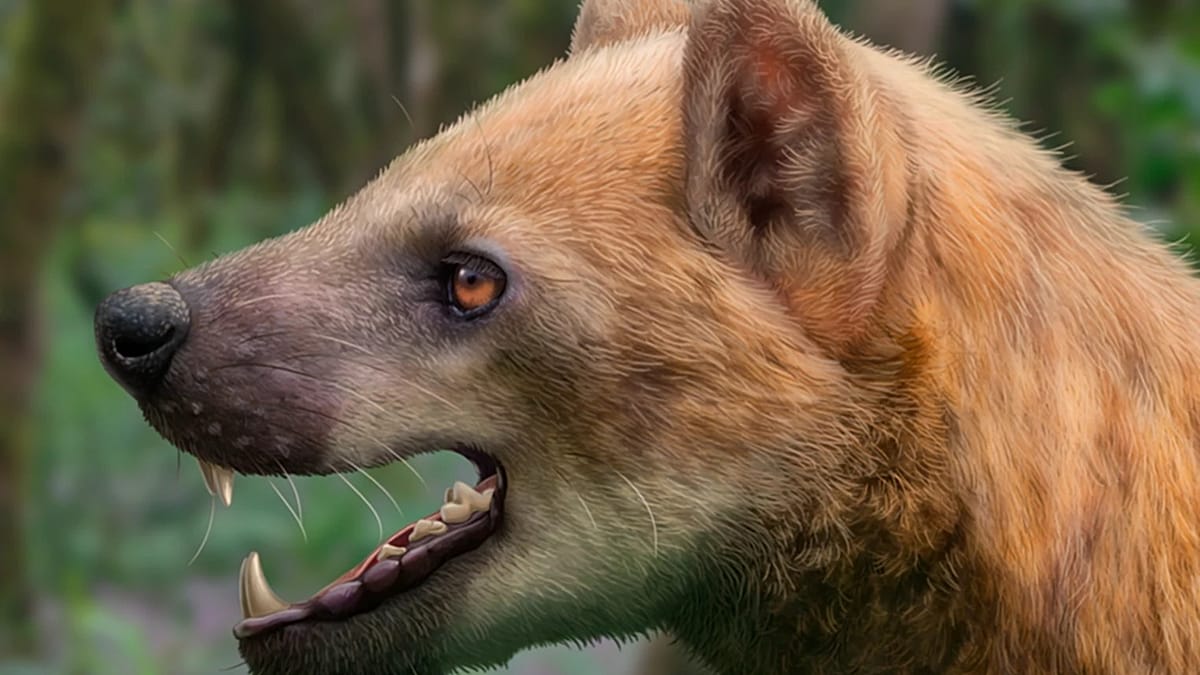
The newly identified species, Paludocyon moyasolai, was described by an international team of researchers after revisiting a fossil skull unearthed decades ago at Els Casots in Subirats, near Barcelona. The skull had originally been found during excavations in the 1990s and was first believed to belong to a previously known member of the genus Paludocyon.
That assumption kept the specimen in storage for years. But during later academic research, scientists noticed that the skull did not match the larger, more robust species to which it had been assigned. Instead of belonging to a massive predator approaching the size of a lion, the fossil appeared to come from a smaller and less heavily built animal.
After years of comparative analysis, the team confirmed it had identified a new bear-dog species in Catalonia, now named in honor of renowned palaeontologist Salvador Moyà-Solà. The finding also strengthens Els Casots as a globally important Miocene fossil site.
What exactly was Paludocyon moyasolai?
Despite the nickname “bear-dog,” amphicyonids were neither true bears nor true dogs. They were an extinct family of carnivorous mammals that combined traits seen in both groups, creating one of prehistory’s most fascinating predator lineages.
Paludocyon moyasolai is believed to have been:
- About the size of a large modern dog
- Roughly 50 to 70 kilograms in weight
- A mesocarnivore, meaning it ate a mixed but meat-focused diet
- Likely adapted to hunting small and medium-sized prey
The fossil evidence includes a skull, much of the dentition and an isolated lower molar. Those teeth proved especially important. Researchers noted unusually developed rear molars, including a broad second upper molar and a third molar larger than what is typical for the genus. This dental structure suggests a more varied feeding strategy than expected.
Rather than dominating the food chain as the largest hunter in its habitat, this animal likely occupied a more flexible ecological niche. It may have preyed on primitive deer, bovids and ancestral pigs while coexisting with larger carnivores in the same environment.
A tropical Catalonia 15.9 million years ago
The discovery of a new bear-dog species in Catalonia also helps recreate a dramatically different version of the region. Around 15.9 million years ago, the landscape of Els Casots was not the Mediterranean setting we know today. It was a shallow lagoon bordered by tropical forest, teeming with wildlife.
This ancient ecosystem included:
- Crocodiles and snakes
- Fish and aquatic life
- Diverse mammal species
- Multiple carnivores sharing the same territory
The muddy lagoon environment played a critical role in preserving fossils so well. Bodies that became trapped after death were shielded from scavengers and rapid decomposition, allowing skeletal remains to survive for millions of years. That exceptional preservation is one reason Els Casots has become one of Europe’s benchmark Miocene localities.
Why this fossil discovery matters
At first glance, identifying a new extinct predator may seem like a niche scientific event. In reality, the new bear-dog species in Catalonia adds an important piece to a much larger puzzle: how carnivore communities evolved and adapted during the Miocene epoch.
Researchers studying Iberian fossil sites have been working to understand how different predators managed to coexist. Other sites in Spain, including Los Valles de Fuentidueña and Cerro de los Batallones, have revealed unusually rich carnivore assemblages featuring bear-dogs, early felids, hyaenas and bears.
Stable isotope analysis has been especially valuable in this work. By sampling tiny amounts of tooth enamel and examining them with mass spectrometry, scientists can infer what extinct animals ate and how much they competed with one another. These methods have shown that prehistoric carnivore ecosystems were often highly competitive, with some species surviving by targeting different prey or hunting in different habitats.
In that context, Paludocyon moyasolai helps fill a chronological and ecological gap. It represents an earlier stage in the history of amphicyonids on the Iberian Peninsula and offers new evidence about how these predators diversified before ultimately disappearing.
From fossil archives to modern cultural inspiration
There is also a broader cultural lesson in the discovery of this new bear-dog species in Catalonia. The fossil sat in storage for years before its importance was fully understood, proving the enduring value of archives, collections and expert curation. In many ways, that idea resonates with the worlds of luxury brands, luxury decor and luxury design, where heritage objects, material integrity and thoughtful rediscovery often define true value.
Natural history continues to inspire contemporary aesthetics in subtle but powerful ways:
- Organic forms drawn from teeth, bone and ancient landscapes influence sculptural interiors
- Earthy mineral palettes echo fossil-rich terrain and sedimentary layers
- Museum-quality display and preservation shape modern collectible culture
- Deep time and rarity reinforce the allure of one-of-a-kind design narratives
The intersection of science and design is not accidental. Both disciplines are driven by observation, detail and the desire to interpret the world in meaningful, enduring forms.
Conclusion
The identification of a new bear-dog species in Catalonia is a powerful reminder that some of history’s most important discoveries begin with a second look. From a skull stored away for decades, scientists have revealed a medium-sized Miocene predator, a tropical lost world and a richer understanding of how prehistoric carnivores lived and competed.
For readers interested in culture, heritage and design as much as science, this story underscores a timeless truth: preservation matters, and hidden masterpieces—whether fossil, object or idea—often reveal their full value only when revisited with fresh eyes.