
Architecture news rarely captures a wider cultural shift as clearly as the latest announcement from Copenhagen. The Copenhagen Architecture Biennial has unveiled the theme and dates for its second edition, signaling a timely conversation about how design, urbanism, and luxury living must respond to a changing planet.
Set to run from September 9 to October 15, 2027, the event will unfold under the theme “Elements”, with programming organized around fire, earth, air, and water. Following the inaugural 2025 edition’s call to “Slow Down,” the Biennial is now turning toward a deeper question: what happens when architecture stops trying to dominate the environment and starts learning how to live with it?
Architecture News: Why Copenhagen’s “Elements” Theme Matters
This major piece of architecture news speaks directly to one of the most urgent issues in contemporary design. For decades, architecture has often been framed as a means of control—over temperature, climate, terrain, moisture, and even risk. The 2027 Copenhagen Architecture Biennial challenges that idea, arguing that the old modern promise of total environmental mastery is no longer realistic, and perhaps never truly was.
Instead, the Biennial’s curatorial direction asks architects, designers, planners, and researchers to consider a more dependent, responsive relationship with the natural world. In practical terms, that means rethinking how buildings are conceived, how cities are regulated, and how public space can better accommodate ecological realities.
For readers interested in Luxury Architecture, Luxury Design, and Luxury Home Decor, this shift is especially significant. High-end design is increasingly moving beyond spectacle toward resilience, material intelligence, wellness, and environmental sensitivity. In that sense, the Biennial’s elemental framework is not just conceptual—it reflects where premium architecture is heading.
The Dates, Venues, and Citywide Scope
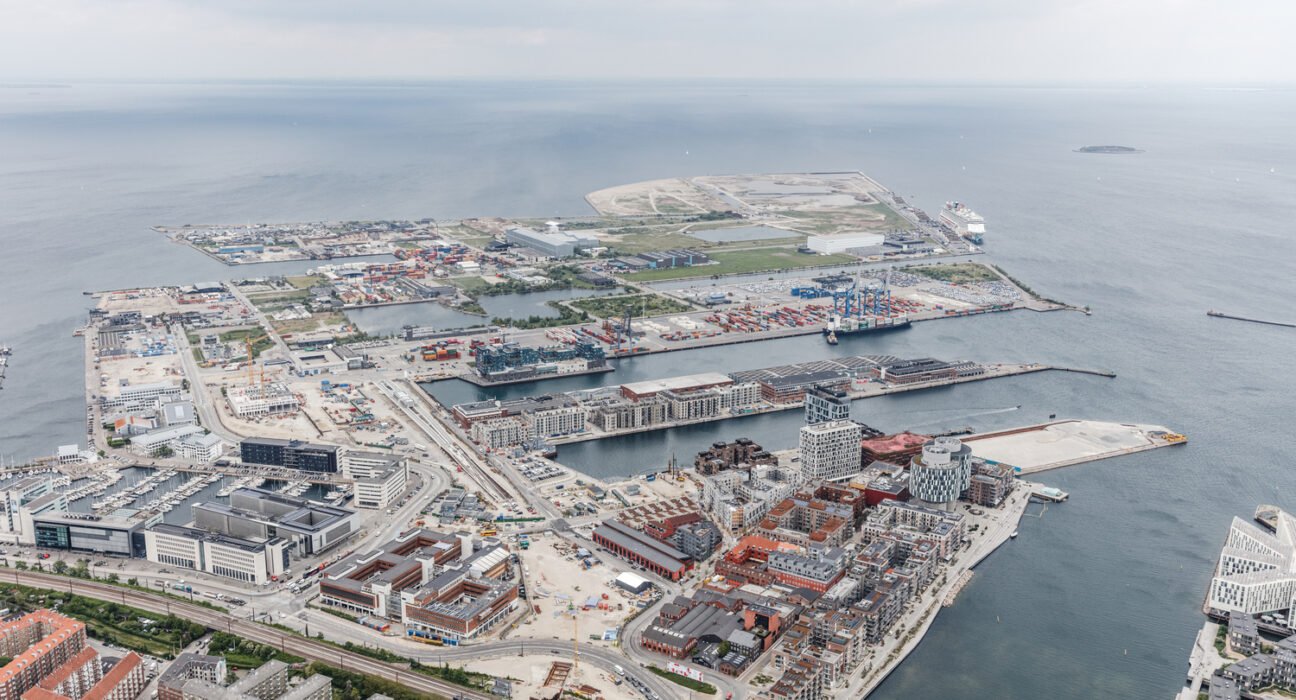
According to the announcement, the Copenhagen Architecture Biennial 2027 will activate more than 60 venues across the city, extending through Copenhagen’s Cultural District and other key urban locations. This distributed format reinforces the Biennial’s city-as-laboratory identity, inviting the public to experience architecture in context rather than as an isolated exhibition object.
Among the highlighted venues are:
- Vandkulturhuset Papirøen, the newly built project by Kengo Kuma
- Simian
- Kunsthal Nord
- Halmtorvet 27
Four major exhibitions will anchor the program, each exploring architecture’s relationship to the elemental forces of fire, earth, air, and water. This structure promises a rich mix of installations, critical research, spatial experiments, and public dialogue.
As a piece of architecture news, the announcement also reinforces Copenhagen’s reputation as a global capital for human-scale urbanism and thoughtful civic design.
What the “Elements” Theme Means for Design Culture
The Biennial’s curatorial framing critiques the longstanding belief that unlimited technological progress can free architecture from climate, geography, biology, and material limits. In today’s context—marked by rising temperatures, polluted air, sea-level threats, depleted soil, and strained resources—that premise feels increasingly unstable.
The 2027 edition asks difficult but necessary questions:
- Who is protected by architecture, and who remains exposed?
- What systems are preserved, and what is allowed to fail?
- How can buildings support care, ritual, comfort, and collective life?
These are not abstract concerns. They touch everything from coastal urban planning and passive cooling to material sourcing and housing equity. For the luxury market, they also point to a new design language—one where refinement is expressed through climate responsiveness, craftsmanship, longevity, and sensory connection to place.
From Control to Coexistence
One of the most compelling ideas behind this architecture news update is the suggestion that the best buildings of the future may not be those that seal out the world, but those that allow occupants to experience it more meaningfully. That could translate into:
- Natural ventilation and breathable interiors
- Material palettes rooted in earth, stone, clay, and timber
- Water-sensitive landscapes and adaptive public realms
- Design strategies that embrace seasonal change rather than resist it
In luxury homes and hospitality spaces, these principles are already beginning to shape a more tactile, grounded aesthetic—one that values atmosphere as much as image.
Open Calls, Pavilions, and the Return of Assemble!
Another important aspect of this architecture news announcement is the return of the Biennial’s participatory and professional platforms. A new open call for pavilions will invite architects, designers, and researchers to propose public installations responding to the Elements theme.
This follows the success of the 2025 edition’s Slow Pavilions and suggests that temporary structures will again play a central role in making the Biennial visible and accessible across the city.
The professional symposium Assemble! will also return, this time with a sharpened focus on policy and regulation. That emphasis is notable. Rather than treating architecture as a purely aesthetic discipline, the Biennial is highlighting the legal and political frameworks that determine how cities build, extract resources, consume energy, and distribute protection.
Expect Assemble! to generate debate around:
- Urban policy and planning reform
- Construction standards and environmental regulation
- Resource use and extraction
- Public responsibility in climate adaptation
For professionals in architecture, interiors, and real estate, this policy lens may prove to be one of the event’s most influential dimensions.
Copenhagen’s Broader Design Leadership
This latest architecture news arrives as Copenhagen continues to strengthen its global design standing. The city was again named the world’s most livable city in the 2026 Economist Intelligence Unit Global Liveability Index, reinforcing its reputation for quality of life, public infrastructure, and people-centered planning.
That reputation is closely tied to the legacy of Danish architect and urban thinker Jan Gehl, whose work has helped define Copenhagen’s pedestrian-friendly identity. His 90th birthday is being marked by programming at the Danish Architecture Center, further underscoring how deeply design is woven into the city’s civic culture.
In a global landscape that includes the Sharjah Architecture Triennial, master-builder initiatives in Valparaíso, and the Tallinn Architecture Biennale’s focus on scarcity and constraint, Copenhagen’s “Elements” theme feels especially relevant. It connects local urban excellence to a larger international reckoning about how and why we build.
Why This Matters for Luxury Architecture and Home Design
For audiences following premium residential trends, this architecture news story offers more than an event update. It points to a broader recalibration in the luxury sector itself. Today’s most forward-looking luxury homes are not simply larger or more technically advanced—they are more intelligent in how they engage light, airflow, materials, landscape, and ecological limits.
Key takeaways for luxury-focused readers include:
- Wellness-driven design is increasingly tied to air, water, and thermal comfort
- Natural materials are becoming central to sophisticated interiors
- Climate-responsive architecture is redefining prestige
- Durability and adaptability are now essential design values
In that sense, the Biennial may offer an early glimpse of where elite residential and hospitality design is headed next.
Architecture news does not get much more consequential than this: the Copenhagen Architecture Biennial 2027 is positioning elemental forces not as design obstacles, but as the very foundation of architecture’s future. For anyone invested in Luxury Architecture, urban innovation, or the evolution of refined living, the message is clear—great design will be defined not by control over nature, but by a deeper harmony with it.