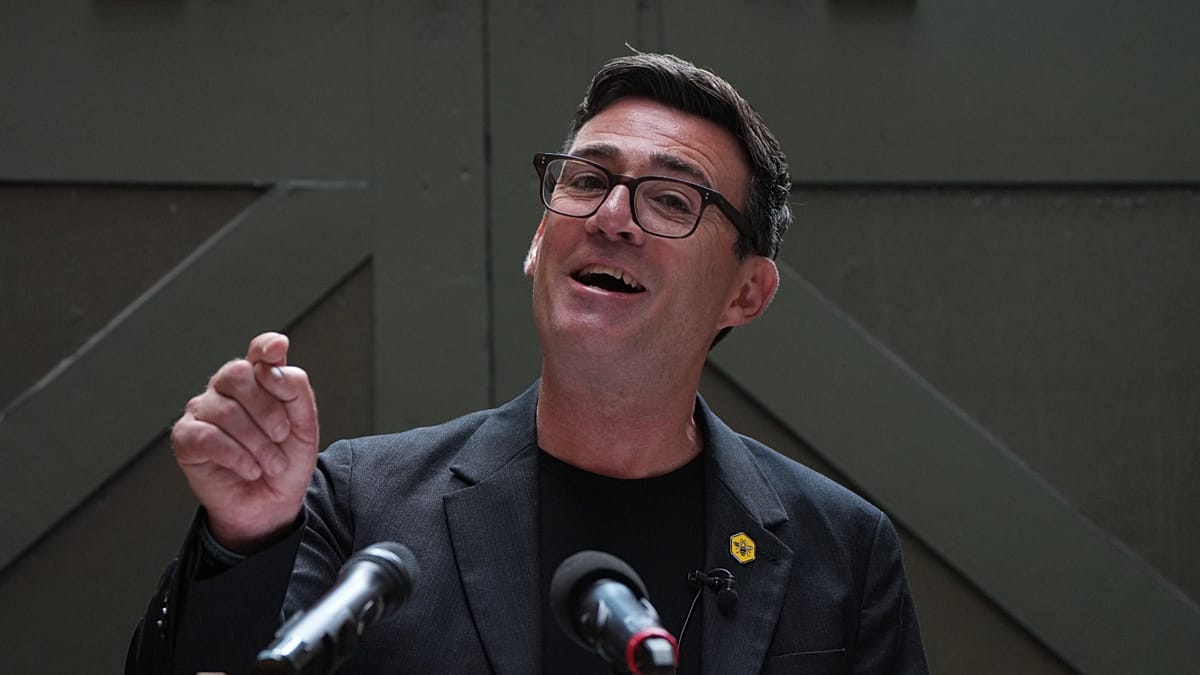
Andy Burnham rules out early general election, and that single pledge may matter far beyond Westminster. For business leaders, investors, and even sectors tied to luxury brands, luxury decor, and luxury design, Burnham’s commitment to policy continuity signals a political environment that may favor steadier planning over sudden disruption.
Set to replace Keir Starmer after the prime minister’s resignation, Burnham has said he would govern according to Labour’s 2024 manifesto rather than seek an immediate public mandate. He also used a public Q&A to underline support for Ukraine, closer European ties, and long-term electoral reform. While these are political headlines first, they also shape the commercial climate in which premium retail, hospitality, interiors, and design-led businesses operate.
Andy Burnham Rules Out Early General Election and Signals Stability
The clearest message from Burnham’s remarks is continuity. As Andy Burnham rules out early general election, he is effectively telling markets, employers, and consumers that a change in leadership does not automatically mean a reset in government priorities.
That matters because early elections often create short-term uncertainty around:
- Tax policy and consumer confidence
- Business investment timelines
- Property and development decisions
- Retail expansion and hiring plans
- Currency and market sentiment
By promising to work from Labour’s existing manifesto, Burnham is signaling that core commitments remain in place. Those include constraints around major increases to income tax, national insurance, and VAT rates, all of which are closely watched by consumer-facing sectors.
For premium and design-led industries, predictability can be almost as valuable as growth. Luxury spending is highly sensitive to confidence, and businesses in upscale homeware, interiors, boutique hospitality, and branded retail often plan around multi-year investment cycles.
What Burnham’s Position Means for Luxury Brands and Premium Retail
Although the story is rooted in British politics, the commercial implications reach into lifestyle and design markets. When Andy Burnham rules out early general election, he reduces the likelihood of an abrupt policy shock that could hit discretionary spending.
A more predictable backdrop for high-end consumption
Luxury brands depend not only on affluent customers but also on broader confidence among investors, landlords, and international visitors. A stable political timetable can support:
- Flagship store planning in major UK cities
- Premium hospitality and dining investment
- High street regeneration tied to experience-led retail
- Cross-border partnerships with European suppliers
Burnham has hinted at potential tax changes involving warehouses to help support high street businesses such as pubs. While details remain limited, that idea aligns with a broader discussion about rebalancing the relationship between physical town centers and distribution-heavy commerce.
For luxury retail, that could be significant. Many premium brands rely on destination shopping, curated in-store experiences, and neighborhood prestige. Policies that strengthen the high street may indirectly benefit design-conscious retail environments and premium consumer experiences.
Why the UK’s premium sectors watch tax signals closely
Because Labour’s manifesto set fiscal boundaries, Burnham may have less room for sweeping tax-and-spend shifts. For businesses, that can be reassuring. Luxury brands often face cost pressure from real estate, staffing, logistics, and imported materials. A government that appears constrained by existing tax promises may be seen as less likely to make sudden moves affecting top-line demand.
EU Relations, Ukraine, and the Broader Design Economy
Another major takeaway is that Andy Burnham rules out early general election while also backing continuity in foreign policy and European engagement. He said support for Ukraine would remain at the same level and suggested he wants to continue efforts to build closer ties with the European Union.
For luxury design and decor sectors, closer EU relations are more than a diplomatic issue. They can influence the practical realities of doing business, including:
- Sourcing furniture, textiles, lighting, and finishes from Europe
- Collaborating with continental artisans and manufacturers
- Managing customs, lead times, and supply chains
- Attracting European talent in architecture, interiors, and fashion-adjacent fields
Luxury decor brands and high-end design studios often rely on cross-border networks. Any improvement in UK-EU cooperation could support smoother trade and more efficient project delivery, especially for bespoke interiors and premium residential development.
Electoral Reform and Long-Term Business Culture
Burnham also reiterated support for electoral reform, specifically a move away from Britain’s first-past-the-post system. While this would not happen immediately, it is one of the more consequential long-term signals in his comments.
From point-scoring to problem-solving?
Burnham argued that reform could encourage more collaborative politics. For businesses, especially those making long-horizon investments in real estate, hospitality, and design infrastructure, a more consensus-driven political culture can be attractive.
If Andy Burnham rules out early general election now but pushes for electoral reform in a future manifesto, the result could be a slower but potentially more cooperative policymaking style. That may matter for sectors that benefit from long-term urban planning, heritage restoration, cultural investment, and placemaking.
Luxury design does not flourish in a vacuum. It often thrives in cities and regions where transport, regeneration, tourism, and public realm investment work together. A political system that rewards coalition-building could, in theory, support more integrated development strategies.
What to Watch Next
The immediate story is simple: Andy Burnham rules out early general election and intends to govern under Labour’s current platform. But the next phase will depend on how firmly he sticks to continuity and where he seeks room to innovate.
Key issues to watch include:
- Tax detail: Whether proposals affecting warehouses or high street support become concrete policy.
- EU engagement: Whether closer ties translate into easier trade and business cooperation.
- Consumer confidence: How markets and households respond to a leadership transition without an election.
- Urban policy: Whether Burnham’s local government background shapes regeneration and city-center investment.
- Electoral reform: Whether it becomes an official commitment in Labour’s next manifesto.
For stakeholders in luxury brands, luxury decor, and luxury design, these are not abstract political debates. They affect demand patterns, development pipelines, supply relationships, and the overall mood of the UK market.
Conclusion
As Andy Burnham rules out early general election, he is making a case for stability, continuity, and measured change rather than dramatic political upheaval. That may prove especially important for sectors built on confidence, premium experience, and long-term investment.
For luxury-facing industries, the real takeaway is clear: leadership may be changing, but the government is signaling a steady hand. If Burnham can pair that stability with practical support for high streets, stronger European ties, and a more collaborative political style, the UK’s premium business and design landscape could find firmer ground in the years ahead.