Architecture news rarely offers the chance to watch design thinking unfold in real time, but Berlin is doing exactly that this autumn. At Aedes Architecture Forum, CHYBÍK + KRIŠTOF has transformed the exhibition format into something far more dynamic: a functioning studio where visitors can observe how urban ideas take shape for the future of the city.
Titled Building the Existing City, the exhibition runs from October 23 to December 3, 2026, and places four Berlin-focused proposals at its center. Rather than presenting finished images alone, the show reveals the research, debate, sketching, and architectural development behind each concept. For anyone following architecture news, urban design, or the future of adaptive city-making, the project is a compelling example of how public exhibitions can become active tools for civic transformation.
Architecture News From Berlin: Aedes Becomes a Working Studio
The Berlin exhibition is built around four architectural and urban scenarios selected through 4 Transformations for Berlin, an open call that invited nominations for buildings, sites, and urban situations in need of change. Community groups, institutions, property owners, and individuals were all encouraged to participate, making the initiative notably inclusive.
That democratic framework is what makes this architecture news story especially relevant. Instead of imposing top-down ideas, CHYBÍK + KRIŠTOF is using the gallery as a space for public-facing design development. The selected proposals are being advanced pro bono, in collaboration with the people and organizations connected to each site.
Visitors are not just attending an architecture exhibition; they are entering a live environment where concepts evolve over six weeks. This format turns architecture into a visible process rather than a mysterious final product, offering a rare level of transparency in contemporary design culture.
Why “Building the Existing City” Matters
In a moment when many global cities are rethinking growth, reuse, and density, the exhibition speaks directly to one of the most urgent themes in architecture news: how to work with what already exists. Berlin, with its layered urban fabric and constant reinvention, is an ideal setting for this conversation.
The phrase “building the existing city” signals a broader architectural shift away from tabula rasa planning and toward interventions shaped by context. Instead of asking what can be built from scratch, the exhibition asks more nuanced questions:
- How can underused urban sites be reactivated?
- What kinds of architectural interventions strengthen local identity?
- How should designers respond to social, historical, and physical conditions already present in the city?
- What role can public participation play in shaping urban proposals?
These questions resonate strongly across luxury architecture and luxury design as well. Increasingly, high-end projects are judged not only by aesthetics, but by how intelligently they adapt, preserve, and elevate existing environments.
Inside CHYBÍK + KRIŠTOF’s Design Approach
Founded in 2010 by Ondřej Chybík and Michal Krištof, the practice has developed a reputation for crossing boundaries between architecture, research, education, and urban strategy. With offices in Prague, Brno, Bratislava, and London, the studio works across residential, civic, cultural, and public-space projects.
At Aedes, that wider body of work is organized into four themes:
- PLAY
- LIVE
- ACTIVATE
- ADAPT
Each theme is anchored by a built project and supported with drawings, models, videos, material studies, and research from a broader selection of 20 works. For readers of architecture news, this adds depth to the Berlin studio experiment by showing that these proposals are grounded in an established design philosophy rather than isolated speculation.
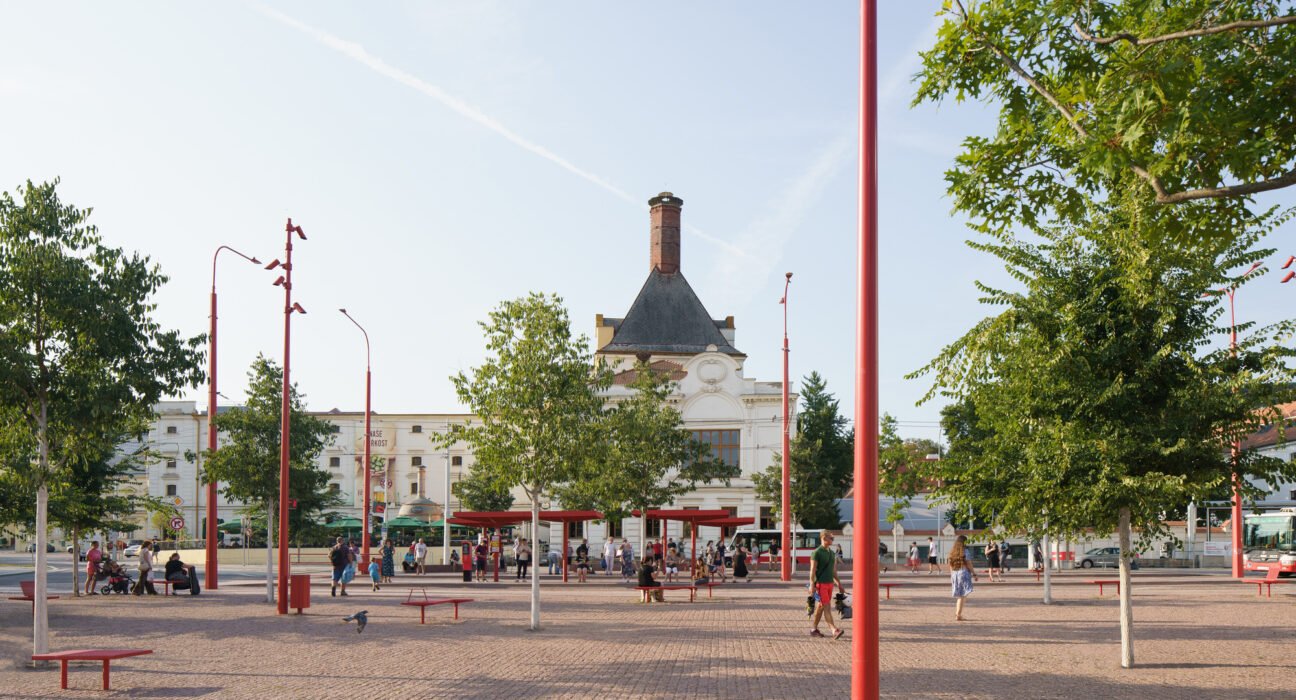
The firm’s completed projects, including the Jihlava Municipal Arena, Nusle Brewery neighborhood, and Lahofer Winery, demonstrate a recurring interest in public life, contextual design, and architectural identity. That same sensibility informs the Berlin exhibition, where design is presented not as spectacle alone, but as a social and urban responsibility.
A New Kind of Architecture Exhibition
What sets this event apart in current architecture news is its hybrid format. It functions simultaneously as exhibition, studio, classroom, and civic forum. Public lectures, film screenings, and workshops for school groups extend the discussion beyond static displays, while critique sessions and talks for university students link the project directly to architectural education.
This layered programming matters because it broadens the audience for design. Architecture is often presented in ways that feel exclusive, but Aedes and CHYBÍK + KRIŠTOF are opening the process to multiple publics:
- Residents interested in the future of Berlin
- Students studying urban design and architecture
- Professionals tracking innovative exhibition models
- Cultural audiences drawn to experimental design formats
For the luxury home, luxury decor, and luxury home decor sectors, the lesson is equally powerful: meaningful design storytelling can create deeper engagement than polished renderings alone. Process, material intelligence, and contextual sensitivity are becoming central to how premium design is understood and valued.
What This Means for the Future of Urban Design
This piece of architecture news reflects a larger evolution in the profession. Architects are increasingly expected to work collaboratively, communicate openly, and engage with the real conditions of communities and cities. Exhibitions like Building the Existing City show how design culture can move beyond display and become an active form of public exchange.
The four Berlin proposals will be unveiled at a closing event on December 3, marking the conclusion of the six-week development period. Yet the exhibition’s real significance may lie in the model it offers: one where architecture is iterative, public, and rooted in the complexities of existing urban life.
At a time when city-making is under pressure from climate concerns, housing demand, and cultural change, this kind of visible, collaborative process feels especially timely. It suggests that the future of architecture may depend less on grand gestures and more on thoughtful transformation.
Conclusion
Among this year’s most thought-provoking architecture news, CHYBÍK + KRIŠTOF’s live studio at Aedes stands out for making design transparent, participatory, and deeply urban. By focusing on Berlin’s existing fabric rather than abstract expansion, the exhibition offers a sharp reminder that the most meaningful architectural ideas often begin with careful attention to what is already there.
The takeaway is clear: great architecture is no longer just about creating new icons. In today’s architecture news, it is increasingly about adapting cities with intelligence, generosity, and a strong sense of place.