

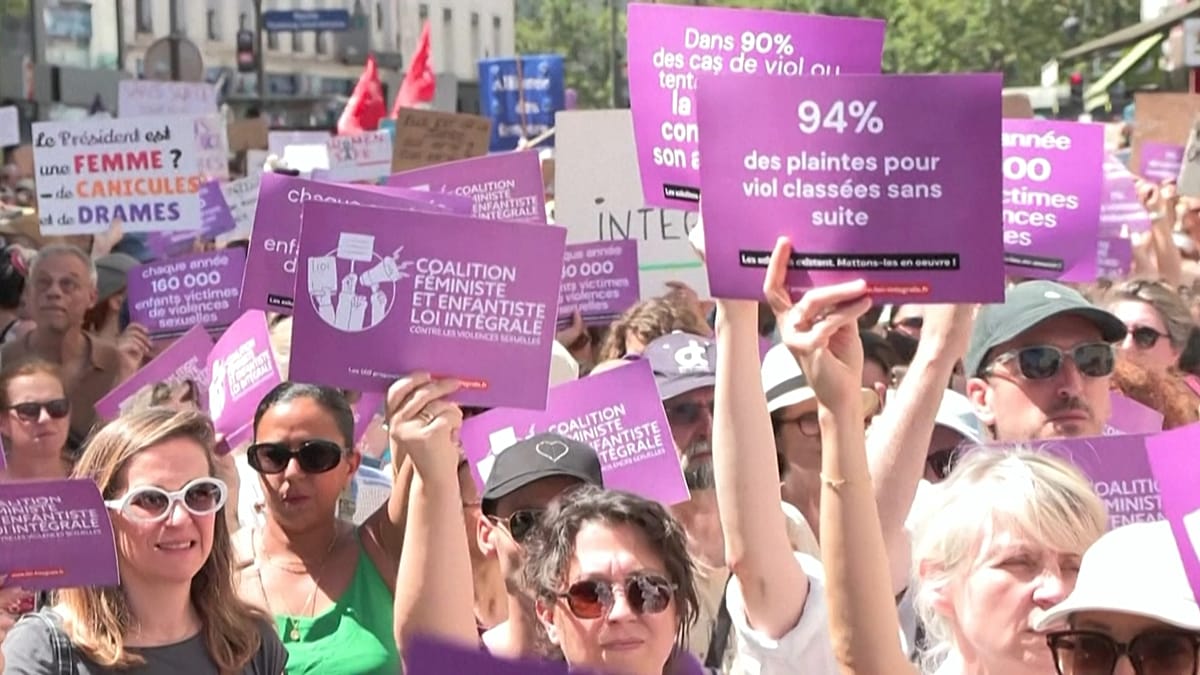
Public outrage in France has intensified after the killing of 11-year-old Lyhanna, turning a local tragedy into a national reckoning. The France protests now unfolding across dozens of cities are not only calls for justice in one case, but demands for a far-reaching legal response to sexual violence against children and stronger institutional accountability.
While this issue sits outside traditional conversations around luxury brands, luxury decor, and luxury design, it raises a bigger cultural question that premium industries cannot ignore: what does a truly modern society choose to value, protect, and prioritise? The France protests are forcing that conversation into the mainstream.
Why the France Protests Have Gained National Momentum
The immediate catalyst was the rape and murder of Lyhanna, who disappeared in late May in Fleurance in southwestern France. Her body was later discovered in an abandoned silo, shocking the country and reigniting concerns about how child protection and judicial systems respond to warning signs.
Public anger grew when reports indicated that the main suspect had previously been formally accused twice of raping a child, yet those investigations were either dropped or allowed to stall. For many demonstrators, that detail transformed grief into a broader accusation: this was not simply an isolated failure, but evidence of deeper systemic breakdowns.
That belief is now driving the France protests, with marchers demanding that authorities stop responding to sexual violence through fragmented, reactive measures. Instead, campaigners want a comprehensive national law that addresses:
- Prevention and early intervention
- Judicial procedures and case handling
- Victim protection and long-term support
- Special safeguards for vulnerable children
- Institutional accountability across public services
What Protesters Are Asking the French Government to Do
Organisers and advocacy groups say France needs a full-spectrum legal framework rather than policy changes introduced only after high-profile tragedies. Their proposed approach is often described as a “360-degree” response, covering the entire chain from prevention to prosecution.
A comprehensive framework law
At the heart of the movement is a call for a single, robust law on sexual violence against children. Supporters argue that piecemeal reforms leave too many gaps between police, prosecutors, social services, schools, and victim support organisations.
Better judicial treatment of complaints
One of the most alarming criticisms raised during the France protests concerns the handling of rape complaints. Activists point to an under-resourced justice system in which a very high share of cases are dismissed without further action. In that environment, survivors and their families often feel abandoned long before a case reaches trial.
Real support for victims
Demonstrators are also pushing for trauma-informed care, legal guidance, psychological support, and long-term assistance for victims. Child protection advocates argue that justice is not only about convictions; it is also about making sure survivors can access safety, stability, and specialised care.
How French Institutions Are Responding
French officials have acknowledged serious failings. President Emmanuel Macron said trust in the country’s institutions is at stake and warned that authorities must identify both individual responsibility and systemic lapses.
Justice Minister Gérald Darmanin went further, calling the Lyhanna case a “huge failure” and ordering prosecutors to review around 70,000 outstanding child sexual abuse cases within a tight deadline. The announcement was intended to signal urgency, but it has also prompted scepticism.
Critics question whether such an ambitious review can be carried out effectively in a justice system already known for delays and limited resources. France has long faced scrutiny over the pace of its courts and the number of professional judges available to handle complex criminal matters.
This tension lies at the centre of the France protests: citizens are no longer asking only for strong words, but for proof that institutions can function quickly, fairly, and consistently when children are at risk.
The Wider Meaning of These France Protests
The demonstrations have been announced in roughly 80 cities, showing that this is not a Paris-only movement. It reflects a nationwide demand for reform and a growing refusal to treat sexual violence as a series of disconnected incidents.
There are several reasons the current mobilisation matters:
- It reframes the debate. Protesters want sexual violence recognised as a systemic issue, not merely a criminal matter handled case by case.
- It challenges public institutions. Courts, police, schools, and child protection services are all being asked to explain where procedures failed.
- It raises the political cost of inaction. The scale of the France protests increases pressure on lawmakers to deliver structural reform.
- It centres victims and families. The movement insists that policy should be shaped by the realities survivors face, not administrative convenience.
Why This Story Matters Beyond Politics
For readers interested in luxury brands, luxury decor, and luxury design, this may seem far removed from the worlds of craftsmanship, aesthetics, and high-end living. But cultural industries do not exist in a vacuum. The values that shape design, patronage, philanthropy, and brand identity are linked to the social climate around them.
In today’s environment, prestige is increasingly connected to ethical credibility. Whether in fashion houses, interior design studios, hospitality groups, or luxury real estate, audiences expect leadership figures and institutions to demonstrate social awareness and responsibility. The France protests underscore a broader shift: public trust now depends not just on excellence or image, but on moral seriousness.
This is especially relevant in France, where luxury culture is deeply intertwined with national identity. As the country confronts institutional failures, every influential sector faces the same underlying question: what kind of society is it helping to build?
What Happens Next
The next phase will likely depend on whether lawmakers translate public pressure into durable reform. Protest organisers want more than emergency reviews or symbolic statements. They are pressing for legislation that can survive media cycles and reshape how cases are prevented, investigated, and prosecuted.
If that does not happen, the France protests may become a defining example of a familiar democratic pattern: a wave of grief, official promises, and then limited structural change. But if the mobilisation succeeds, it could reshape national policy and establish a new benchmark for child protection in Europe.
In the end, the France protests are about much more than one demonstration or one case. They are a demand for a justice system that protects children before tragedy strikes, supports victims when harm occurs, and restores public trust through action rather than rhetoric. That is the clear takeaway from the France protests, and it is one the country cannot afford to ignore.