

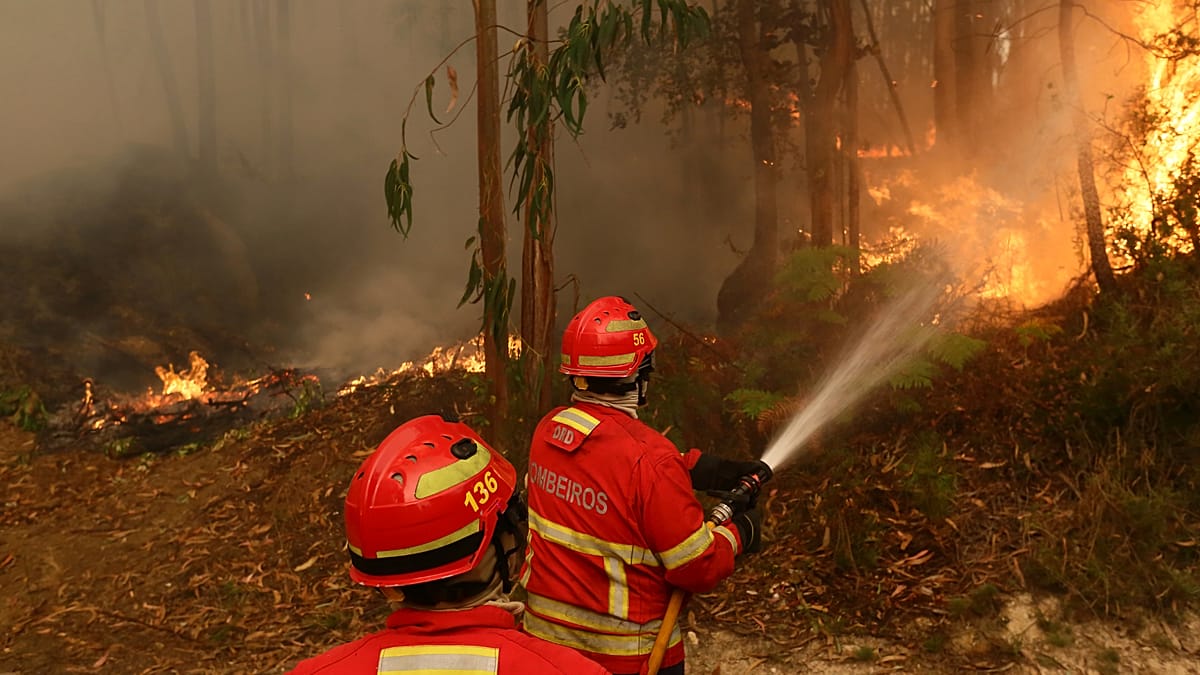
The Portugal wildfires are once again exposing how extreme heat can turn landscapes into high-risk emergency zones within hours. As soaring temperatures grip the Iberian Peninsula, Portugal has called in international support, underscoring both the scale of the crisis and the growing importance of coordinated European disaster response.
While this story sits outside the traditional world of luxury brands, luxury decor, and luxury design, it speaks directly to a rising concern across premium real estate, hospitality, and architectural planning: climate resilience. From secluded estates to design-led countryside retreats, the Portugal wildfires are a stark reminder that environmental risk is now part of the conversation around long-term value, location, and lifestyle.
Portugal wildfires intensify amid extreme heat
Authorities have identified the blaze in Vouzela, in Portugal’s Viseu district, as the most urgent fire front. The fire has been spreading since midweek and has already burned roughly 11,000 hectares, making it one of the country’s most serious active incidents.
The emergency comes as Portugal faces an intense heatwave, with temperatures forecast to climb as high as 44°C in some areas. These conditions create a dangerous mix of dry vegetation, wind shifts, and rapid fire spread, increasing pressure on ground crews and aerial firefighting teams.
According to Portuguese civil protection authorities, the country has been placed on alert across the mainland from 3 to 6 July. Officials have also reported multiple injuries in the past 24 hours, including serious cases, highlighting the human toll behind the headlines.
How Europe is responding to the Portugal wildfires
To contain the emergency, Portugal activated the European Civil Protection Mechanism, a system designed to speed up cross-border assistance during major disasters. The response was swift:
- Italy dispatched two Canadair water-bombing aircraft
- Spain sent 118 firefighters and 45 support vehicles
- Additional resources from Morocco are expected through bilateral civil protection agreements
The Spanish teams arrived in the early hours and were directed toward the Vouzela blaze, where they joined Portuguese responders already working on the ground. Aerial support from Spain and Italy is expected to reinforce operations as conditions allow.
European Commission President Ursula von der Leyen publicly confirmed the assistance, emphasizing European solidarity with Portugal as it confronts another devastating wildfire season. That message matters: the Portugal wildfires are not only a national emergency, but also part of a wider southern European climate challenge that increasingly demands shared resources.
Why the Vouzela fire is drawing so much concern
Not all wildfire events carry the same level of danger. The Vouzela blaze stands out because of its size, persistence, and the weather conditions fueling it. By Saturday afternoon, more than 1,200 firefighters, over 400 vehicles, and multiple aircraft were involved in the response.
Several factors make this fire especially difficult to control:
- Extreme temperatures: Heat accelerates fuel dryness and reduces containment opportunities.
- Large fire footprint: A fire covering thousands of hectares becomes more complex to attack from both land and air.
- Terrain challenges: Rural and forested zones can limit access for heavy equipment and delay suppression.
- Resource strain: Peak summer fire periods often stretch national firefighting capacity.
The Portugal wildfires also arrive at a moment when many Mediterranean countries are on high alert, meaning mutual aid must be carefully coordinated to ensure no country is left exposed.
Emergency restrictions now in place
To reduce additional ignition risks, the Portuguese government has introduced special protective measures. These include:
- Bans on access to forest areas
- Restrictions on the use of certain machinery in rural zones
- Heightened public safety alerts across the mainland
These steps may feel disruptive, but they are standard during periods of severe fire danger. In high-heat scenarios, even routine agricultural or maintenance activity can spark fast-moving fires.
What this means for luxury property, design, and rural living
For audiences in luxury brands, luxury decor, and luxury design, the Portugal wildfires carry a broader message about how premium living is evolving. Scenic rural homes, vineyard estates, boutique retreats, and architect-designed residences in southern Europe remain highly desirable, but buyers and developers are increasingly looking beyond aesthetics.
Climate resilience is becoming a luxury essential
Today’s high-end property conversation includes not just views, materials, and craftsmanship, but also:
- Fire-resistant landscaping and defensible perimeters
- Heat-adapted building materials
- Emergency water access and storage systems
- Smart sensors for smoke, heat, and air quality
- Evacuation planning integrated into estate design
In other words, resilience is becoming part of modern luxury design. A beautiful property must now also be prepared for environmental stress. The Portugal wildfires reinforce that premium architecture and decor are increasingly connected to sustainability, safety, and regional climate intelligence.
Hospitality and second-home markets may also adapt
Luxury hospitality operators and second-home owners in Portugal, Spain, and Italy are paying closer attention to seasonal risk patterns. Wildfire planning may influence everything from insurance costs to landscape design and guest safety protocols. This does not diminish the appeal of these destinations, but it does change what informed investment looks like.
The bigger picture behind the Portugal wildfires
The current emergency reflects a wider European reality: hotter summers are increasing wildfire risk across multiple countries at once. That makes rapid-response systems, aircraft sharing, and joint emergency planning more important every year.
The Portugal wildfires are therefore more than a breaking news event. They are part of a long-term climate story shaping how governments protect communities, how regions manage forests, and how homeowners, designers, and investors think about the future of southern European living.
As firefighters from Portugal, Spain, and Italy work to contain the flames, the clearest takeaway is this: the Portugal wildfires show that resilience is no longer optional. Whether in public safety planning or luxury design strategy, adaptation is becoming one of the defining values of modern Europe.