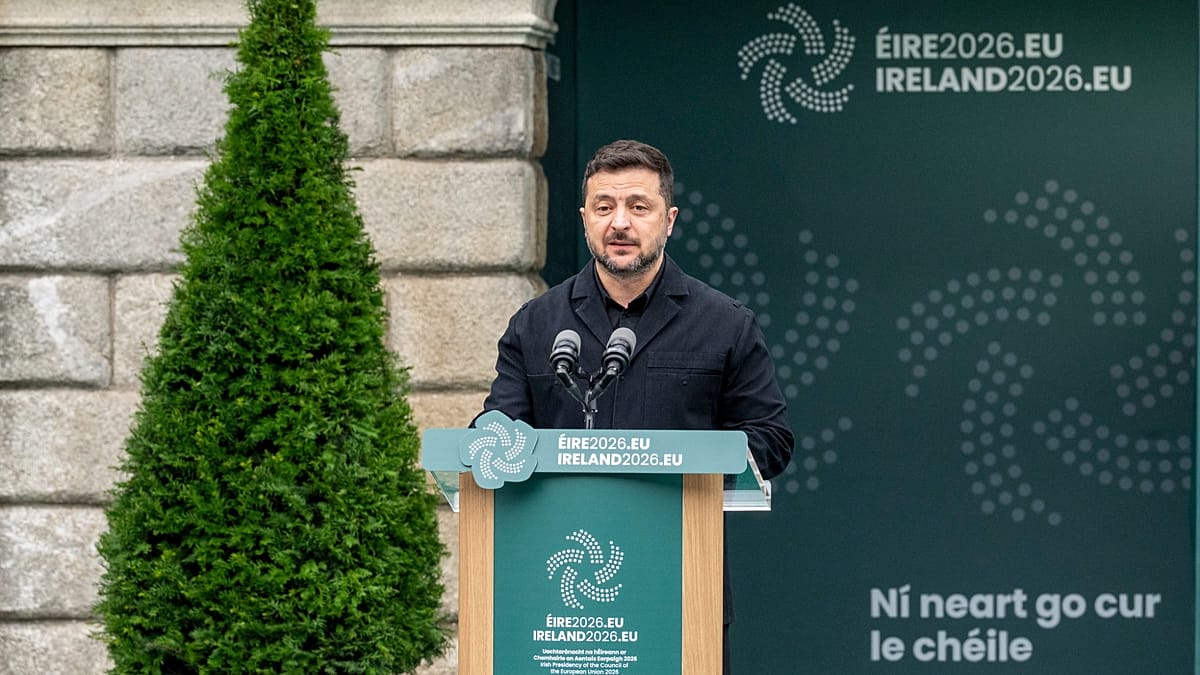
Europe’s political map shapes far more than policy—it influences investment, culture and the spaces people inhabit. The latest Ukraine EU accession debate, marked by Volodymyr Zelenskyy’s appeal to Hungary and Poland not to block Kyiv’s path, is also a story about the future identity of Europe and the design, architecture and interiors that emerge from it.
While the discussion is unfolding in diplomatic chambers, its implications reach into the worlds of luxury architecture, luxury design and luxury interiors. As Ukraine pushes to deepen integration with the European Union, questions of reconstruction, heritage preservation, urban renewal and high-end residential development are becoming increasingly relevant.
Why the Ukraine EU accession Process Matters Beyond Politics
The current Ukraine EU accession process has become one of the bloc’s most sensitive strategic issues. Zelenskyy has argued that Ukraine has fulfilled the requirements requested by EU leaders to move negotiations forward, despite the immense pressure of wartime governance.
At present, Ukraine has opened only one negotiation cluster, while hoping to unlock the remaining areas in the near term. Resistance from Hungary and growing political discomfort in Poland have complicated that ambition. Zelenskyy’s message in Dublin was clear: decisions on Ukraine EU accession should be based on agreed rules, not shifting emotions.
For observers in design and property sectors, this matters because EU integration often accelerates:
- Cross-border capital flows
- Infrastructure modernisation
- Regulatory alignment in construction and planning
- Higher demand for premium residential and hospitality projects
- Greater emphasis on sustainability and heritage-led urban renewal
In other words, Ukraine EU accession is not only a diplomatic milestone; it could become a catalyst for a new era in the built environment.
Hungary, Poland and the Politics Slowing Ukraine EU accession
The tension surrounding Ukraine EU accession stems from both present-day politics and unresolved historical memory. Hungary’s leadership has raised fresh concerns over Kyiv’s path into the bloc, tempering expectations of a rapid breakthrough. Meanwhile, relations with Poland have deteriorated over disputes tied to the legacy of the Ukrainian Insurgent Army, a subject that remains deeply painful in Polish historical consciousness.
Zelenskyy acknowledged these strains while urging leaders to focus on common security interests and Europe’s future. His remarks suggested that Ukraine is prepared to work through difficult bilateral issues, especially as Russia’s aggression continues to redefine European priorities.
Irish Prime Minister Micheál Martin also struck a pragmatic tone, noting that bilateral disputes have complicated accession processes before, particularly in the Western Balkans. That perspective is important: enlargement rarely follows a perfectly linear path.
For investors, developers and design strategists, this means the timeline around Ukraine EU accession may remain uneven. Yet even gradual progress can shape market confidence and long-term planning across architecture, interiors and luxury real estate.
How EU Enlargement Influences Luxury Architecture and Design
Every wave of European integration leaves a visual and material imprint. Cities evolve, public spaces are reimagined and premium developments respond to new expectations around quality, regulation and international appeal. If Ukraine EU accession advances, the effects could be especially profound because Ukraine combines a rich design heritage with urgent reconstruction needs.
1. Heritage restoration with contemporary luxury
Ukraine’s historic urban fabric—from Lviv’s classical streetscapes to Kyiv’s cultural landmarks—offers fertile ground for restoration-led design. EU-linked investment frameworks could support a model where preservation and contemporary luxury coexist, blending artisan materials, modern engineering and cultural storytelling.
2. Sustainable urban redevelopment
Alignment with EU standards tends to raise the bar for energy performance, environmental planning and resilient construction. In practical terms, Ukraine EU accession could encourage more green building practices, smart-home integration, adaptive reuse and wellness-focused interiors.
3. Growth in premium hospitality and residential sectors
As countries move closer to EU norms, confidence often rises among international brands, private equity and high-net-worth buyers. That can translate into demand for:
- Boutique hotels in heritage districts
- Luxury waterfront and city-centre residences
- Designer mixed-use developments
- High-spec interiors tailored to global tastes
These shifts would position Ukraine not just as a reconstruction story, but as an emerging design destination.
The Cultural Dimension of Ukraine EU accession
One reason the Ukraine EU accession question resonates so strongly is that it is ultimately about belonging. Europe is debating not only legal readiness, but also identity, memory and mutual respect. Those same themes define the most compelling architecture and interiors.
Luxury design at its best reflects place. It respects history without becoming trapped by it. It embraces craftsmanship, local materials and narrative depth while looking ahead. In that sense, the current debate mirrors the design challenge Ukraine faces: how to honour a complex past while building a confident European future.
This is particularly relevant for interior design, where post-conflict spaces often become expressions of renewal. Expect future Ukrainian luxury interiors to lean into:
- Locally sourced stone, timber and metalwork
- Minimalist forms softened by artisanal detail
- Cultural motifs reinterpreted in contemporary ways
- Spaces designed around resilience, comfort and longevity
What Happens Next?
Brussels is expected to pursue a realistic timetable, with one or perhaps two additional negotiation clusters potentially opening before the summer break, while others may follow more gradually. That slower pace does not erase the significance of Ukraine EU accession; it simply confirms that enlargement remains a negotiated, politically sensitive process.
For those in luxury architecture, luxury design and luxury interiors, the key takeaway is this: political integration shapes physical transformation. As Ukraine moves closer to Europe—whether quickly or in stages—the foundations are being laid for future investment, elevated design standards and a new chapter in high-end development.
In the end, Ukraine EU accession is about more than membership. It is about the future form of European life: the cities rebuilt, the homes reimagined and the cultural confidence expressed through architecture and interiors. That makes this political debate one worth watching far beyond Brussels.