
Architecture news rarely feels as conceptually charged as this. In Accra, Ghana, the newly launched Limbo Museum is turning an unfinished Brutalist structure into one of West Africa’s most compelling new destinations for art, architecture, and design.
Rather than conceal incompletion, the institution places it at the center of its identity. Housed within a formerly abandoned concrete estate, the Limbo Museum reframes the so-called ruin not as failure, but as possibility—an approach that resonates deeply across contemporary luxury architecture, collectible design, and culturally driven placemaking.
Architecture News From Ghana: A Museum That Embraces the Unfinished
This major moment in architecture news marks the public debut of the Limbo Museum, a new institution in Ghana, West Africa, dedicated to architecture, art, and design. The project emerged from Limbo Accra, the spatial design and research practice founded in 2018 by Dominique Petit-Frère and Emil Grip.
The studio has built its reputation around an ambitious mission: unlocking the value of unfinished buildings across West Africa and beyond. That philosophy now finds its clearest expression in the museum itself, where an exposed concrete shell becomes a dynamic setting for exhibition-making, research, and creative experimentation.
For luxury design audiences, the project offers something especially significant: a new model of cultural sophistication that is not dependent on polished perfection. Instead, atmosphere, material honesty, and adaptive imagination define the experience.
A Brutalist Building Reimagined
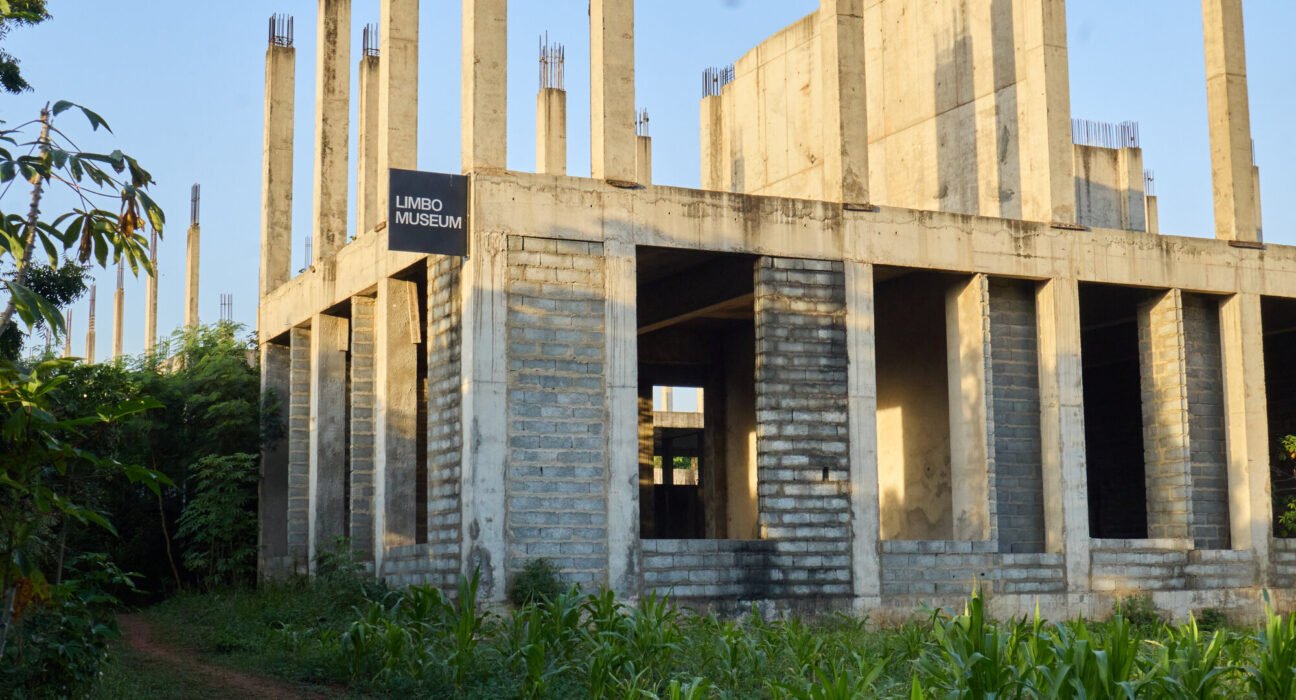
The museum occupies an unfinished Brutalist building whose raw surfaces, open volumes, and incomplete character create a striking architectural backdrop. Instead of treating the structure as a problem to be corrected, Limbo Museum uses its in-between condition as a curatorial asset.
Key architectural features shaping the experience include:
- Exposed concrete surfaces that heighten texture and monumentality
- Natural light that shifts dramatically across unfinished interiors
- A sense of silence and spatial openness that intensifies viewer attention
- An atmosphere where art, architecture, and material decay coexist productively
This is why the story stands out in global architecture news: it challenges conventional museum architecture by making incompleteness part of the institution’s intellectual and aesthetic framework.
The Debut Exhibition: On the Other Side of Languish
The museum officially opened its first public exhibition on October 31, 2025, with On the Other Side of Languish by Reginald Sylvester II. Developed through the institution’s visiting artist residency program and presented in partnership with Gallery 1957, the exhibition sets an ambitious tone for the museum’s future.
Curated by Diallo Simon-Ponte, the inaugural presentation features:
- 19 large-scale sculptures
- 7 paintings
- Works created entirely on-site
That site-specific approach is critical. The unfinished architecture is not merely a container for the art; it actively shapes the exhibition. Raw concrete, filtered daylight, and the palpable sense of suspension within the building all contribute to the emotional force of the works.
In the context of architecture news, this exhibition also demonstrates how adaptive spaces can inspire new artistic production rather than simply host it.
Reginald Sylvester II’s Material Language
Reginald Sylvester II is known for an abstract practice rooted in experimentation with materials and process. His work often engages the industrial and spiritual histories of substances such as steel, rubber, and tarp, transforming them through gesture, resistance, and repetition.
At Limbo Museum, those concerns gain additional depth. The exhibition explores transformation not as a single moment, but as an ongoing state of becoming. Within the unfinished building, that idea feels especially powerful: both artwork and architecture appear caught in productive transition.
For readers interested in luxury decor and luxury home design, there is a broader lesson here. Material richness does not always come from refinement alone; it can also emerge from contrast, tension, and the emotional charge of surfaces left visibly alive.
Why This Story Matters in Global Architecture News
This development is more than an opening announcement. It reflects a wider shift in architecture news toward reuse, adaptive transformation, and regionally grounded cultural institutions. Across West Africa, conversations around unfinished structures, urban growth, and creative reuse are becoming increasingly urgent. Limbo Museum enters that dialogue with unusual clarity.
Its model stands out for several reasons:
- It redefines the ruin: The project rejects the idea that incompletion equals obsolescence.
- It merges disciplines: Art, architecture, design, and experimental media are treated as interconnected fields.
- It centers West African spatial realities: Rather than importing a generic museum formula, the institution responds to local built conditions.
- It advances cultural luxury: The museum offers a refined, intellectually rich experience rooted in authenticity and place.
In today’s architecture news landscape, where many museums compete through spectacle, Limbo Museum makes a quieter but potentially more influential statement. It proposes that unfinished architecture can be not only preserved, but activated as a site of beauty, inquiry, and prestige.
A New Chapter for West African Cultural Design
The opening also arrives amid broader momentum in museum and cultural architecture worldwide. Major institutions in Cairo, Harlem, Suzhou, and Hangzhou are expanding the global conversation around contemporary museum design. Yet Limbo Museum distinguishes itself through its experimental ethos and its direct engagement with West Africa’s evolving material landscape.
Presented as part of Gallery 1957’s Accra Cultural Week, the debut reinforces Accra’s growing role as a center for contemporary art and design discourse. It also points to a future in which luxury architecture is defined not only by exclusivity or finish, but by narrative, context, and bold conceptual vision.
For designers, collectors, and architecture enthusiasts, this is the kind of architecture news worth watching closely. It signals that the next frontier of design innovation may lie in places willing to work with incompletion instead of against it.
Conclusion
The Limbo Museum’s opening is one of the most thought-provoking stories in architecture news today. By transforming an unfinished Brutalist building in Ghana into a living laboratory for art, architecture, and design, the institution offers a fresh blueprint for cultural luxury—one grounded in adaptive reuse, material honesty, and intellectual depth.
The takeaway is clear: unfinished spaces can hold extraordinary value when vision, curation, and architecture align. In Accra, that idea has now taken form in a museum that feels both radically contemporary and deeply rooted in place.