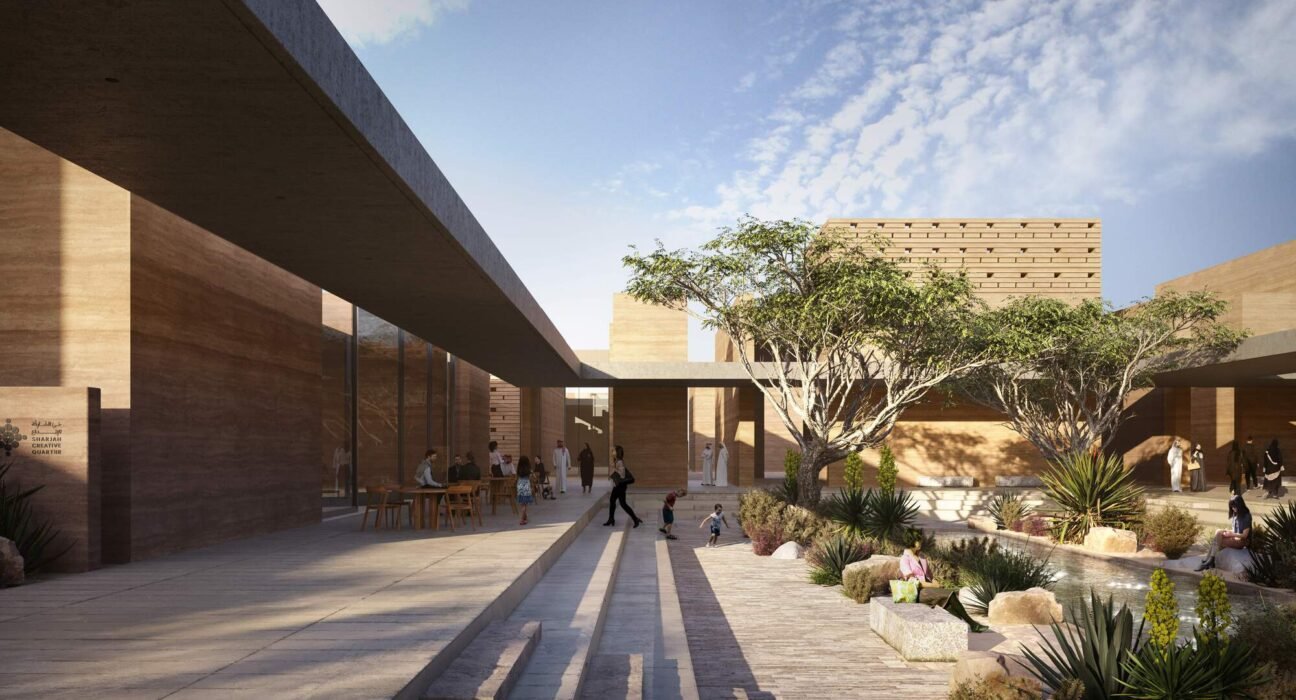
Architecture news rarely captures the future of luxury, sustainability, and cultural identity in one announcement, but Sharjah Design Centre’s newly unveiled rammed earth building does exactly that. Scheduled to open in 2029, the project signals a bold direction for high-end design in the Middle East, where material innovation and regional heritage are increasingly shaping the next generation of landmark spaces.
Positioned at the intersection of luxury architecture, climate-responsive design, and contemporary craft, the upcoming Sharjah Design Centre is more than a new building. It represents a broader shift toward natural materials, low-carbon construction, and design language that feels rooted in place rather than imported from elsewhere. For readers tracking the most important developments in luxury design, this is one of the most compelling stories in current architecture discourse.
Architecture News Spotlight: Why the Sharjah Design Centre Matters
In the world of architecture news, announcements about cultural institutions often focus on scale, star power, or spectacle. What makes the Sharjah Design Centre stand out is its emphasis on rammed earth, a material with ancient origins that is now being reconsidered through a contemporary, high-design lens.
The project’s planned opening in 2029 suggests a long-term investment not just in architecture, but in design education, creative exchange, and sustainable building practices. In a region known for ambitious development, the decision to embrace earth-based construction is particularly meaningful. It offers a counterpoint to glass-heavy globalized aesthetics and instead celebrates texture, mass, thermal performance, and a closer dialogue with the desert environment.
For luxury architecture audiences, this matters because the definition of prestige is changing. Today, exclusivity is no longer tied only to rare finishes or monumental scale. It is increasingly linked to authenticity, environmental intelligence, and craftsmanship.
Rammed Earth and the New Language of Luxury Architecture
Rammed earth has emerged as one of the most fascinating materials in contemporary architecture news. Created by compacting layers of earth into formwork, it produces walls with rich striations, sculptural depth, and a tactile quality that many modern materials struggle to match.
In a luxury context, rammed earth offers several advantages:
- Visual warmth: Natural tonal variation creates interiors and exteriors with a refined, artisanal character.
- Material authenticity: The finish is inherently expressive, reducing the need for excessive surface treatment.
- Thermal performance: Thick earthen walls can help regulate interior temperatures in hot climates.
- Sustainability appeal: Earth-based construction can lower embodied carbon compared with conventional systems, depending on sourcing and engineering.
That combination makes the material especially relevant to luxury home, luxury decor, and luxury home decor trends, where clients increasingly seek spaces that feel serene, grounded, and environmentally conscious. Rather than relying on purely polished surfaces, elite interiors are embracing texture, natural pigments, and handcrafted imperfection.
A Regional Design Statement Rooted in Place
Another reason this story belongs at the forefront of architecture news is its cultural resonance. Sharjah has built a reputation as one of the Gulf region’s most thoughtful hubs for art, heritage, and design. A rammed earth design centre aligns with that identity by referencing regional building traditions while projecting them into the future.
This approach reflects a larger movement across luxury architecture in the Middle East:
- Designers are re-evaluating vernacular materials and passive cooling strategies.
- Cultural institutions are becoming laboratories for sustainable innovation.
- Architecture is being asked to express local identity more clearly and responsibly.
For design-conscious homeowners and industry observers, the Sharjah Design Centre offers inspiration beyond the institutional scale. Its material strategy reinforces a broader lesson: luxury design feels more powerful when it responds to climate, context, and memory.
What This Means for Luxury Design and Interiors
Although the project is a public cultural building, its influence is likely to ripple into private residential design. That is often how major architecture news stories shape the market: ideas introduced in museums, galleries, and design centres eventually appear in high-end homes, boutique hospitality spaces, and collectible interiors.
Expect the Sharjah Design Centre’s design direction to reinforce several ongoing luxury design trends:
1. Earth-toned palettes
Warm sand, clay, ochre, and mineral neutrals continue to dominate luxury home decor. Rammed earth architecture naturally supports these tones, making spaces feel both sophisticated and calming.
2. Sculptural walls and tactile surfaces
Smooth minimalism is giving way to richer materiality. Textured plaster, stone, and earthen finishes create depth and character without visual clutter.
3. Climate-conscious luxury
True luxury now includes comfort delivered through smart environmental design. Thermal mass, shading, passive cooling, and low-impact materials are becoming central rather than optional.
4. Collectible craftsmanship
As luxury decor evolves, buyers are gravitating toward pieces and spaces that reveal the hand of the maker. Rammed earth, with its layered formation and natural variation, embodies that sensibility at an architectural scale.
Why 2029 Could Mark a Defining Moment
With its opening planned for 2029, the Sharjah Design Centre has time to mature into one of the region’s most anticipated cultural projects. In architecture news, timelines matter because they indicate how ambitious a project really is. Longer horizons often allow for deeper research, stronger material testing, and a more integrated architectural vision.
If executed thoughtfully, the building could become a benchmark for:
- Contemporary rammed earth construction in arid climates
- Luxury architecture with low-impact material strategies
- Design institutions that blend heritage with innovation
- Regional architecture that is globally relevant without losing local character
That potential is exactly why the project deserves attention now, not just when doors open. It reflects where the industry is heading: toward buildings that do more than impress visually. The most important projects of the next decade will also need to demonstrate responsibility, resilience, and emotional connection.
Conclusion
The latest architecture news from Sharjah points to a future in which luxury architecture is defined by substance as much as style. The Sharjah Design Centre’s planned rammed earth building, slated for 2029, stands as a powerful reminder that the most compelling design often comes from reconnecting with natural materials, local identity, and climate-responsive thinking.
For anyone interested in luxury architecture, luxury home trends, or the evolution of sustainable design, this is a project worth watching closely. If it fulfills its promise, the Sharjah Design Centre may become not just a destination, but a model for what meaningful, future-facing architecture can be.